
Waifu Industrial Complex
Anduril, anime girls, and the militarization of fandom
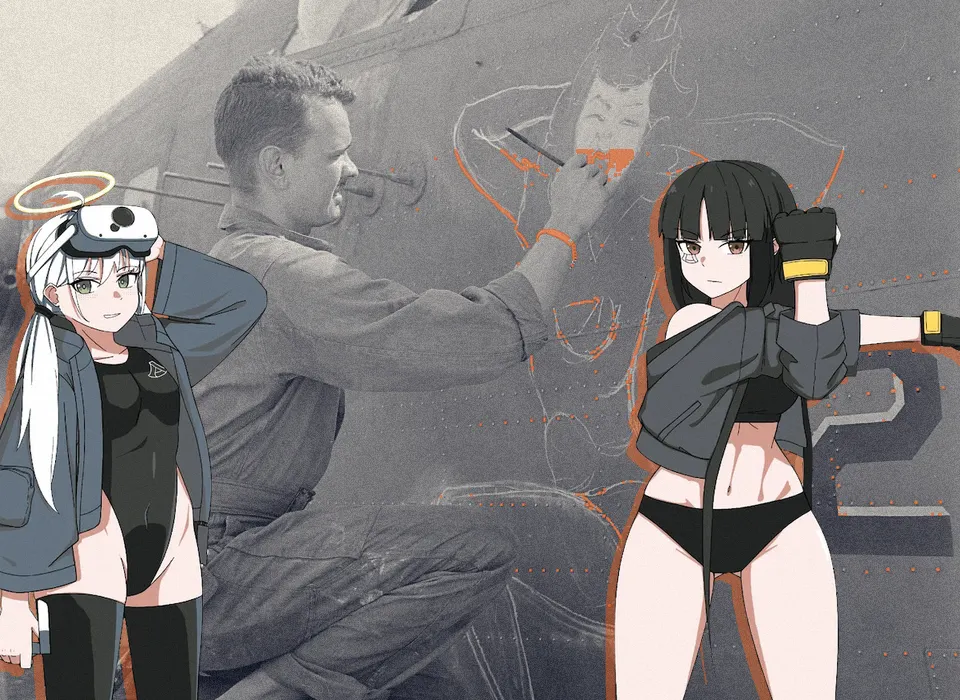
Why is a defense contractor selling anime girl hoodies on KommandoStore.com? It could be the first step toward creating an unregistrable lobby—or a powerful engine for recruitment. This essay reads Anduril Industries’ recent forays into loot boxes, licensed waifu merch and visual novels as a new twist on a decades-old lineage that includes WWII bomber nose art: a way of turning government-owned-and-operated murder machines into objects of private, personal devotion.
If fascism aestheticizes politics, this could be the aestheticization of procurement.
I’ve spent most of the last decade at various organizations under the loose umbrella of “branding,” which has given me a decent set of goggles for sizing it up in the wild. Now, whenever I encounter a promotional “activation,” I can’t help trying to mentally reverse-engineer the chain of meetings, PowerPoints and emails that brought it into being. This was the first thing on my mind when Instagram introduced me to the consumer merchandising arm of Anduril, the defense-tech company founded by Oculus creator Palmer Luckey.
On the company’s online store, beyond all the standard ephemera that any sufficiently locked-in marketing intern can now conjure into existence with two Zyns and Claude Cowork, there is the enticing option of spending $250 in exchange for a piece of a destroyed military drone. The component arrives vacuum-sealed, like coffee, weed, or crime scene evidence, complete with a color-coded “rarity” system straight out of World of Warcraft: white for “common,” black for “rare,” and yellow for “legendary.” Those who are feeling lucky can even opt for a “mystery” blind box whose contents remain hidden until unboxing.
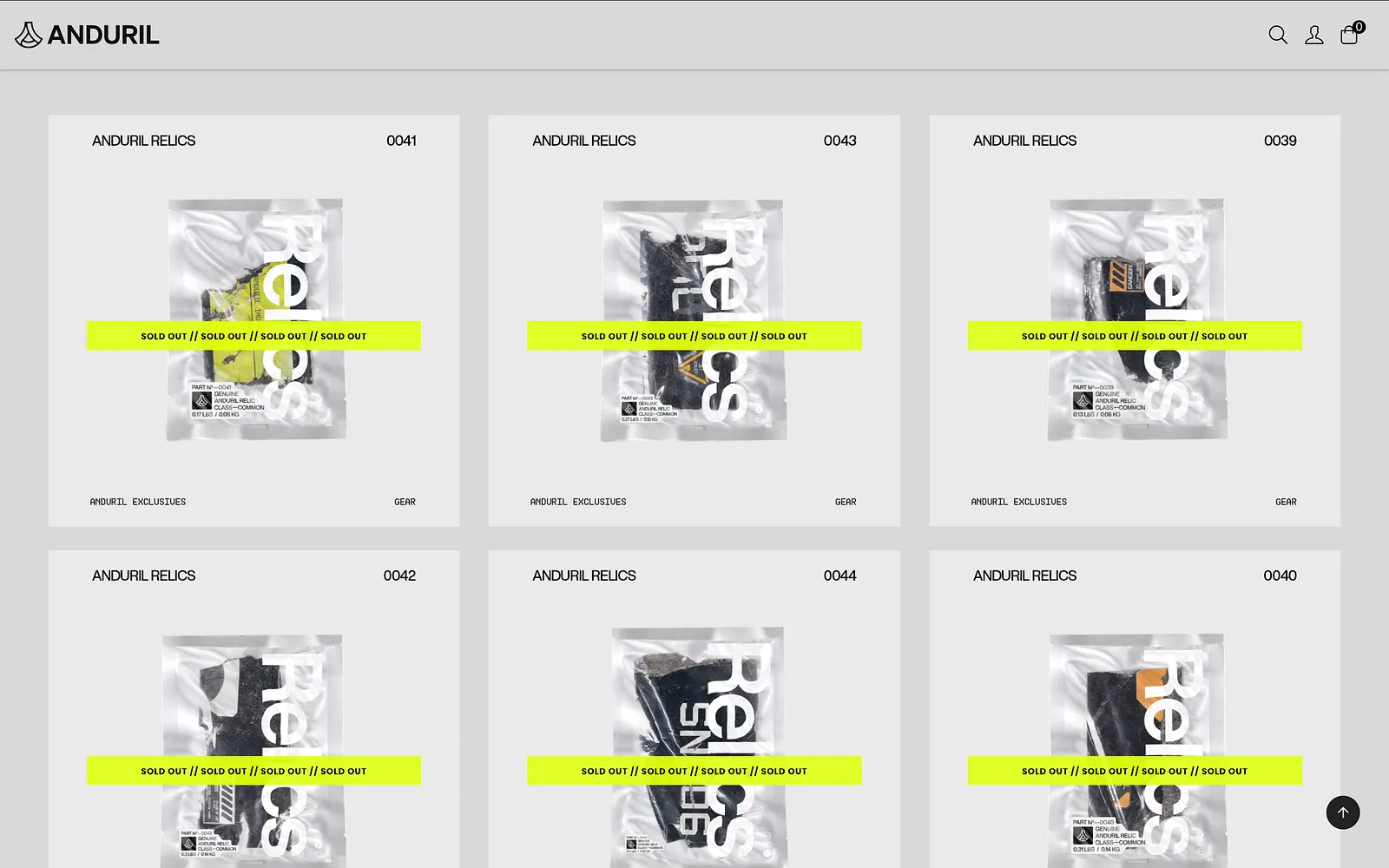
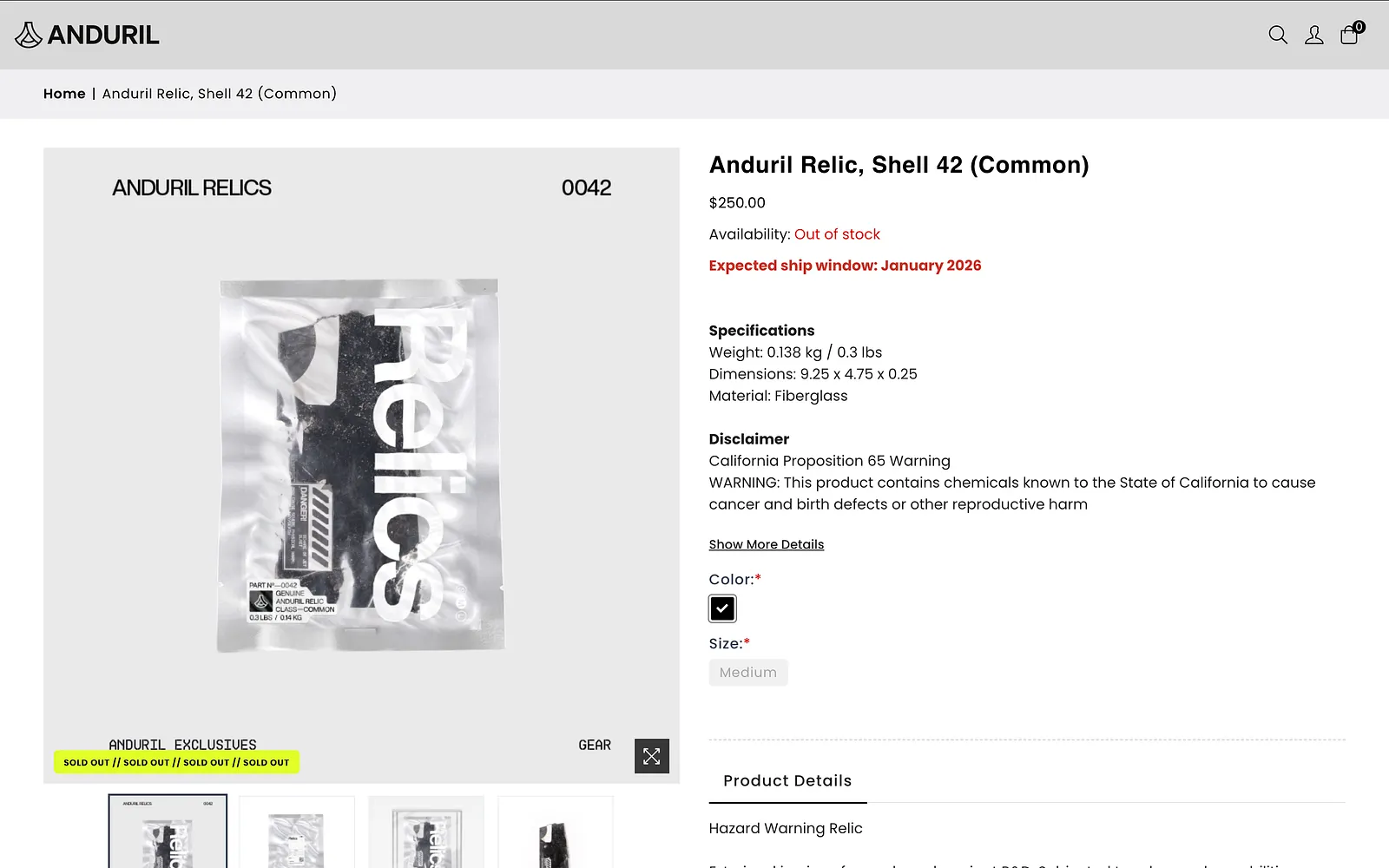
If the idea that Anduril is selling the actual broken remains of their weapons systems like Overwatch loot crates wasn’t enough, there’s also the matter of the word they use to describe those components. Regardless of rarity or mystery level, they’re all referred to as “relics”—which gives someone like me some clear and unmistakable echoes of Warhammer 40,000, and suggests that whoever chose that term knew exactly what they were doing. I say that as a compliment and a warning.
Anduril’s higher-ups are no strangers to the value of word association. As any current or former gifted kid will tell you, the company is named for Aragorn’s sword in The Lord of the Rings—a weapon made from the shards of another legendary sword once used to defeat existential evil, reforged at a moment of crisis to do so again. This is not to castigate Luckey and company as aura-vampires on behalf of a book and trilogy of movies that I personally like very much, but to point out that their first branding decision was to define themselves in relation to a very specific canon with a very specific fandom to match—one where knowing the deep history of a fictional object is an activity in itself.
With Anduril’s capital-N Nerd roots in mind, their recent forays into merch have left me wondering: why would a defense contractor ground their aesthetic in this particular register, and what is it doing for them? Beyond any superficial geek-bait factor, or even a slightly more functional desire for brand differentiation, it may be that they seek to build a fandom of their own—and, in doing so, cultivate something that the Lockheeds and Raytheons of the world have sunk billions of dollars and decades of planning into acquiring by other means.
>tfw no murder robot gf
Back in 2024, around the same time that Anduril started offering “relics,” they began collaborating with the online retailer KommandoStore — named for the /k/ommandos, users of the 4chan “Weapons” board /k/ — on another new lineup of unconventional product-focused merch. The stars of this collaboration are the “Anduril Sisters”: anime girl personifications of real-life Anduril weapons systems. These include the Ghost autonomous reconnaissance helicopter, the Dive-XL autonomous undersea vehicle, and the ALTIUS 600M “loitering munition”—a somewhat euphemistic phrase for a single-use explosive drone designed to circle above a battlefield until it identifies a target worth dive-bombing.
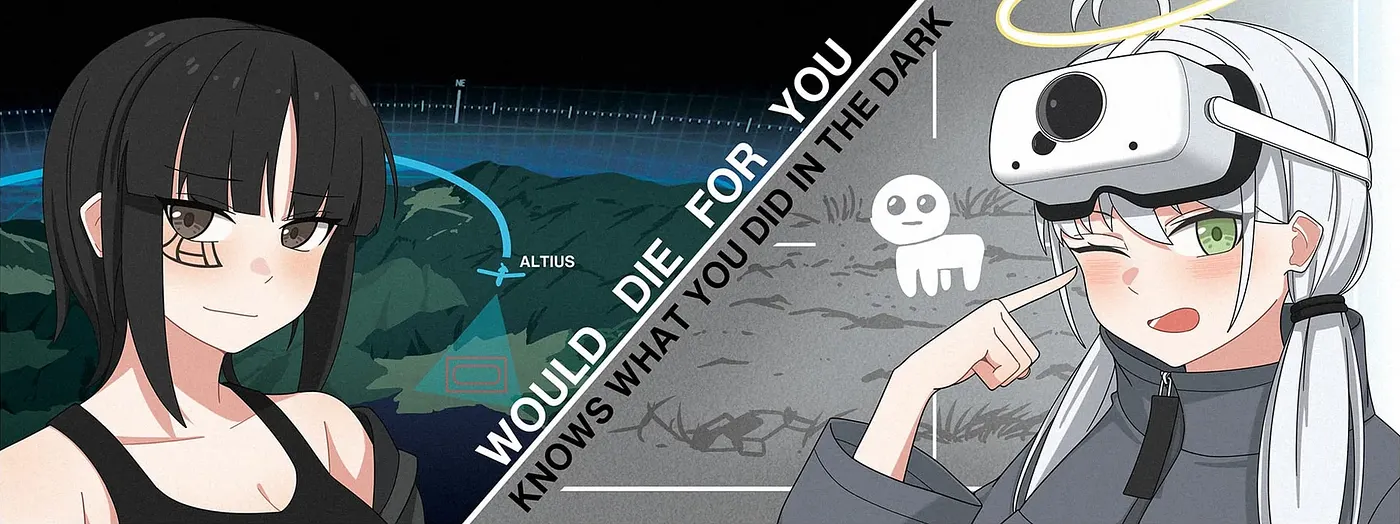
The first two Sisters, Ghost and ALTIUS, made their public debut in a visual novel short titled “Help! My Anime Dreamgirl is an Anduril ALTIUS 600M Loitering Munition,” published to KommandoStore’s YouTube and X accounts on October 2nd, 2024. The description included on YouTube is particularly instructive.
“Sometimes the Arsenal of Democracy™ needs a little help rebooting itself. Thankfully there is a simple blueprint for accelerating the effective defense of the Western world and its values. Thanks to a recent self-report survey, we now know that a handful of Japanese animated tv shows and video games are responsible for over 45% of Gen Z and Millennials working in the defense industry.
In the immortal words of Mark Hanna, “those are rookie numbers.” At Kommandostore we believe we can do better. We believe we can pump up those rookie numbers. So we tasked our team with creating an original visual novel for the Anduril ALTIUS and Ghost unmanned aerial systems. We hope you enjoy “Help! My Anime Dreamgirl is an ALTIUS 600M Loitering Munition””
Rarely does a piece of promotional copy state its theory of action in such naked and carefully measured terms. Per this description, which Anduril almost certainly had to sign off on, the Anduril Sisters explicitly exist to move real human bodies into the defense industry. The attached nine minutes of imagined visual novel gameplay put that theory into hyper-targeted and kind of exhausting practice.
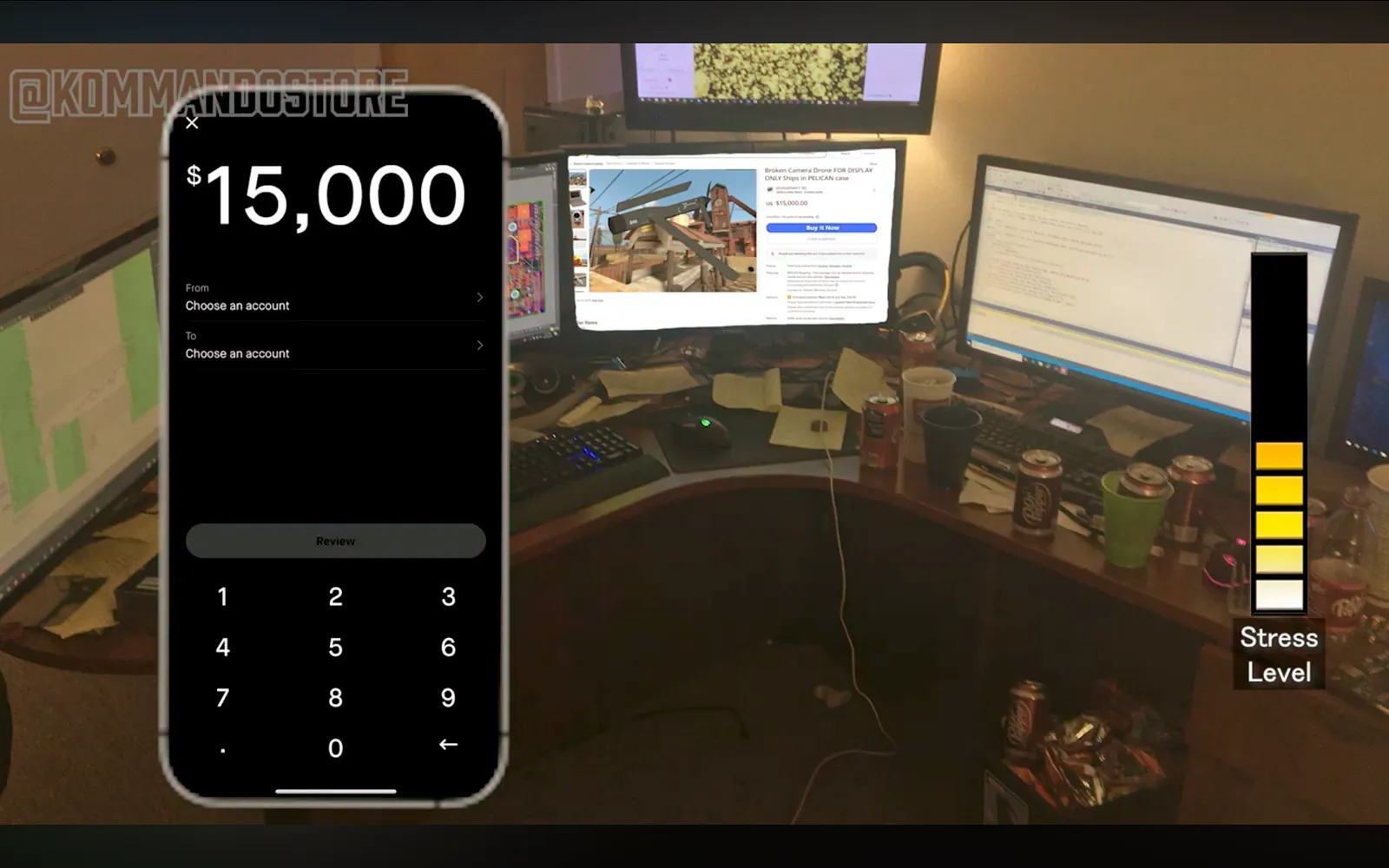
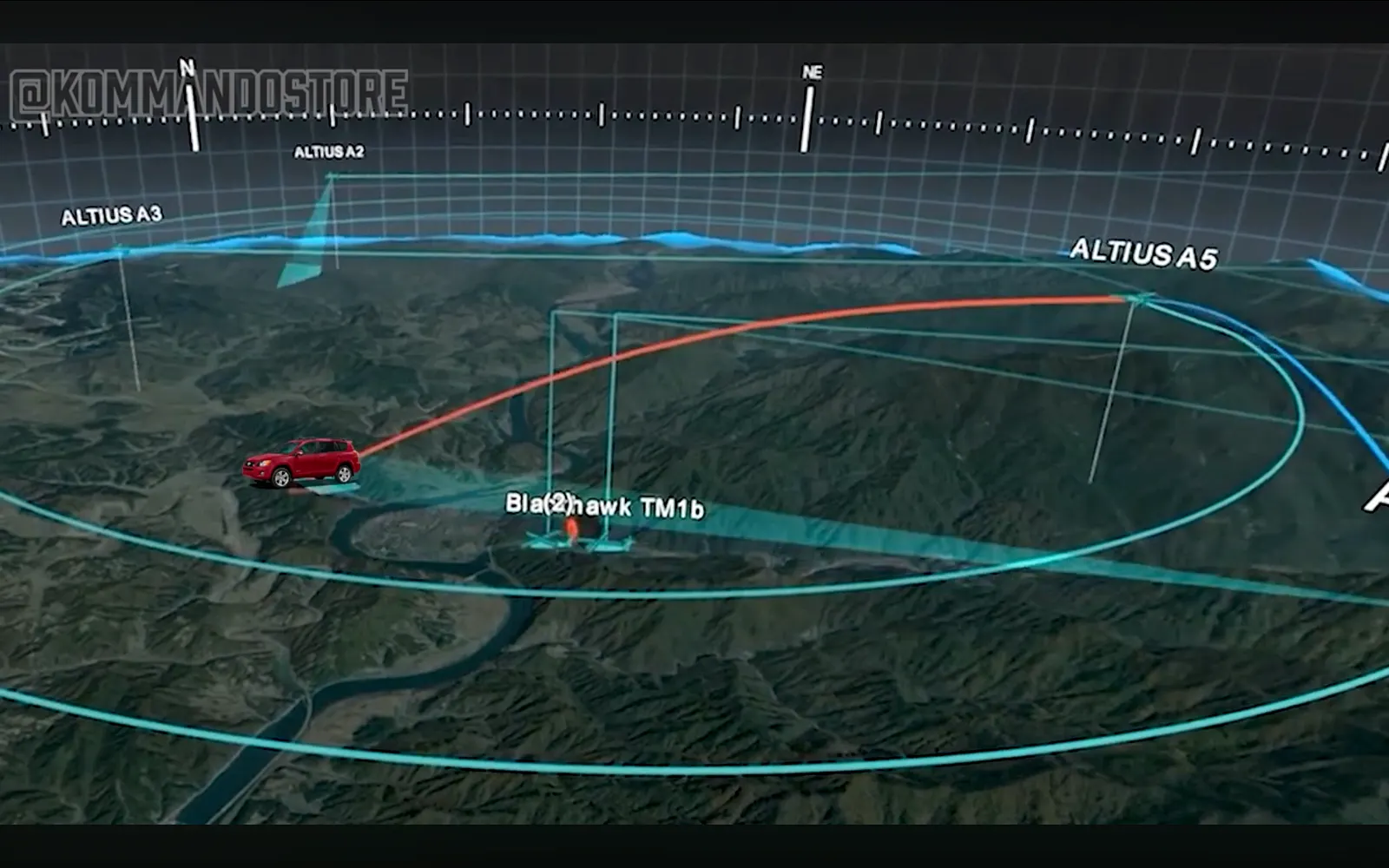
The script — voiced-over in a 4chan-native second-person POV — follows a lonely /k/-poster who liquidates his life savings to buy a real ALTIUS unit from a seller in Ukraine. When it arrives, after rebuilding it with “JB Weld and Louis Rossmann videos,” he convinces his mom to let him borrow her Toyota RAV4 by claiming he has an internship opportunity at “a really important defense prime”—contractor lingo for Lockheed, Raytheon, and company. He then takes his purchase to a nearby quarry for a test flight, only to watch it execute a textbook kill chain on his borrowed car.
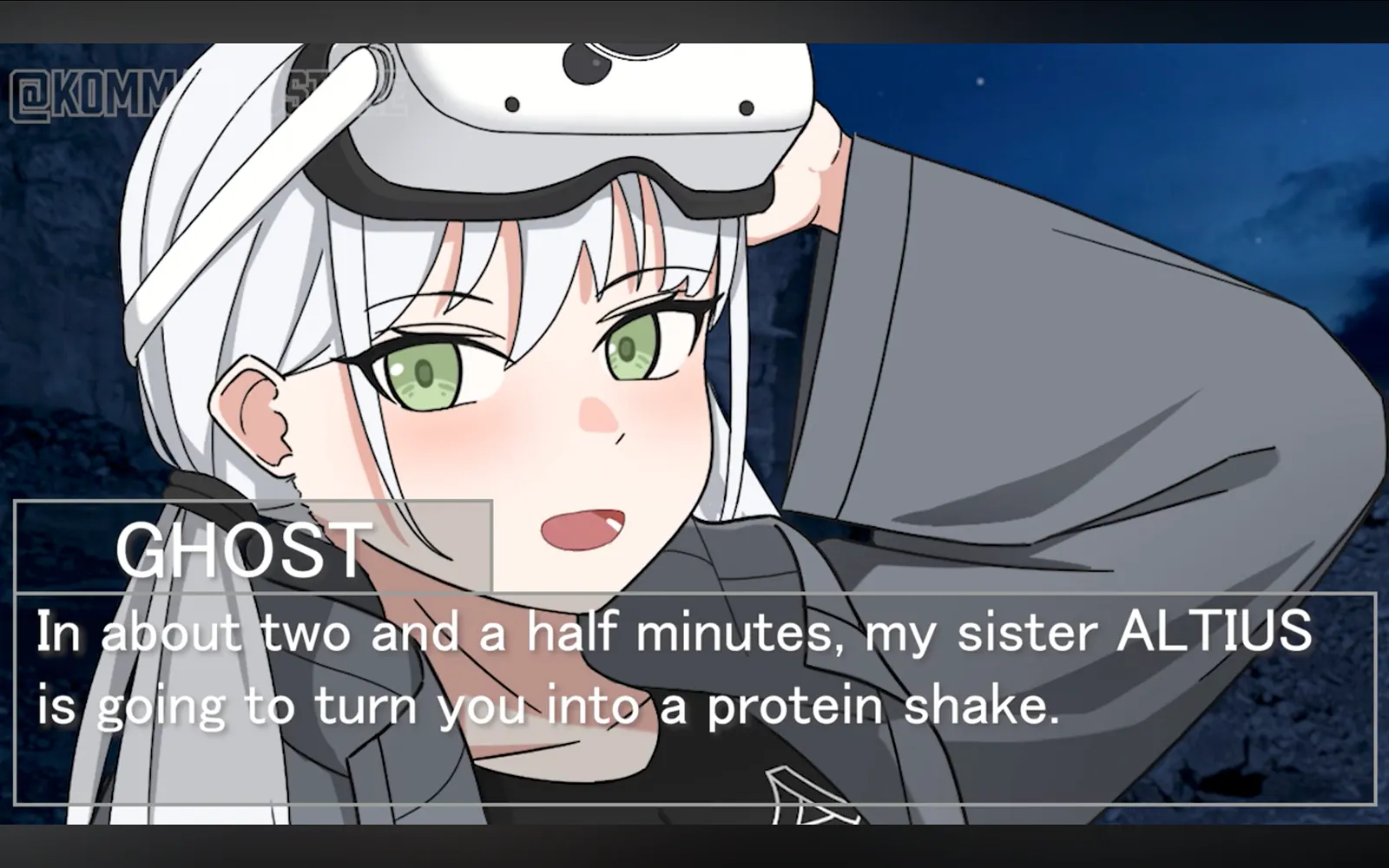
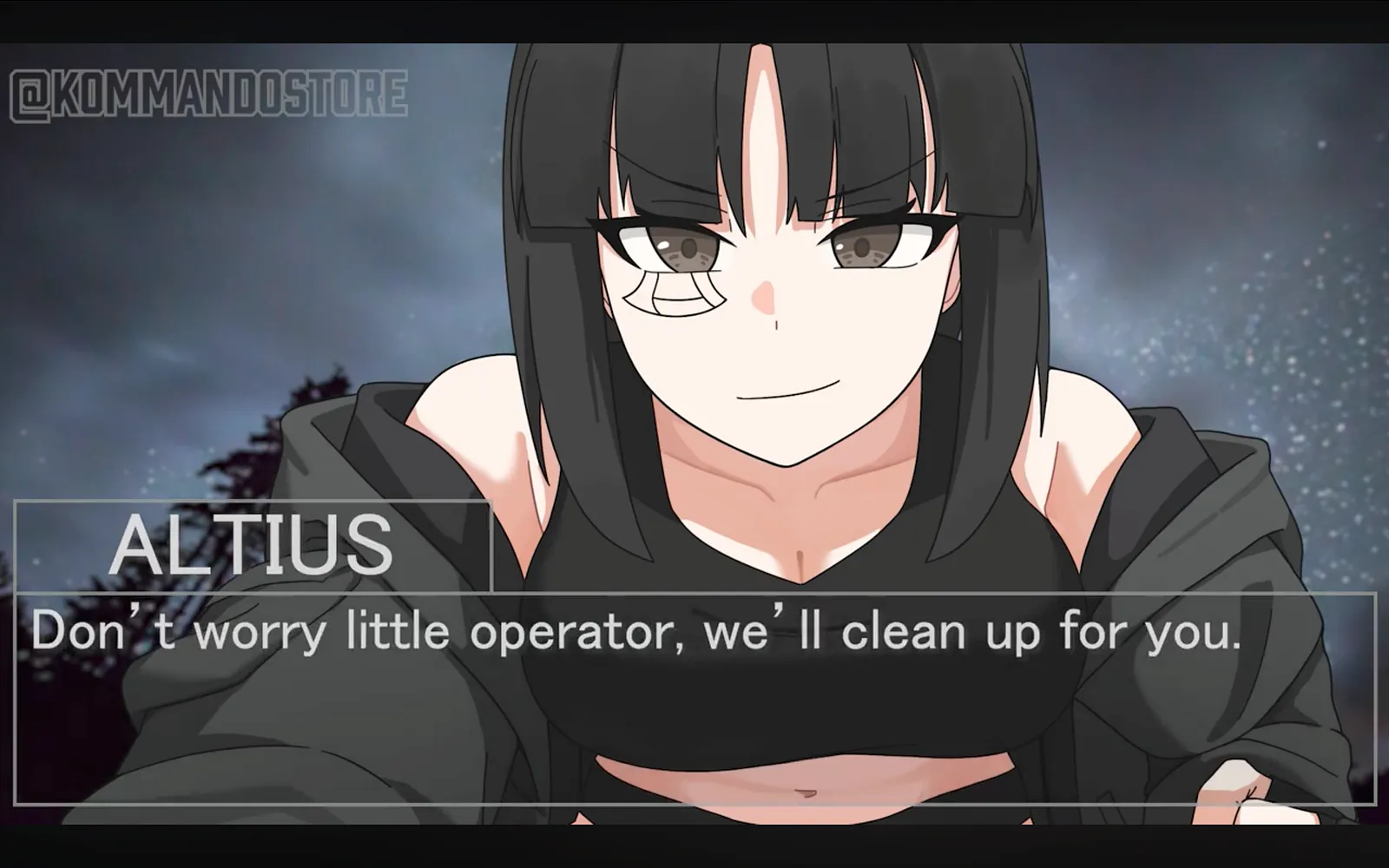
Enter the Anduril Sisters. Ghost arrives first to mock the operator’s “job interview,” followed by ALTIUS, who pins him to the ground and berates him for thinking he was qualified to fly “the best loitering munition in the Arsenal of Democracy.” The titular girl then orders him to “find, fix and finish your homework” before offering a parting ultimatum: she will return in eight months, at which point she expects the protagonist to be able to bench-press his own body weight, or “I will literally kill you and you will deserve it.”
This is not the only bit of writing attached to the collaboration that seems to have been precision-crafted to mess with someone like me. True to KommandoStore’s nominal pedigree, each product page also includes a few lines of honest-to-god 4chan-style greentext. In a recent piece for INC Longforms, I argued that the > before every line of greentext is a mechanism for deniable sincerity; the > suspends the subsequent line’s sincerity without completely negating it, enabling writers to make a joke and a confession — and enabling readers to absorb both — at the same time. In retrospect, maybe I was naive to think that this form would remain the purview of internet folk writing, rather than doing brand work for a company that makes suicide drones.
Critically, below these lines, there’s also a thank-you note to Anduril and Palmer Luckey for “being cool with a bunch of nerds waifu-fying their drones.”
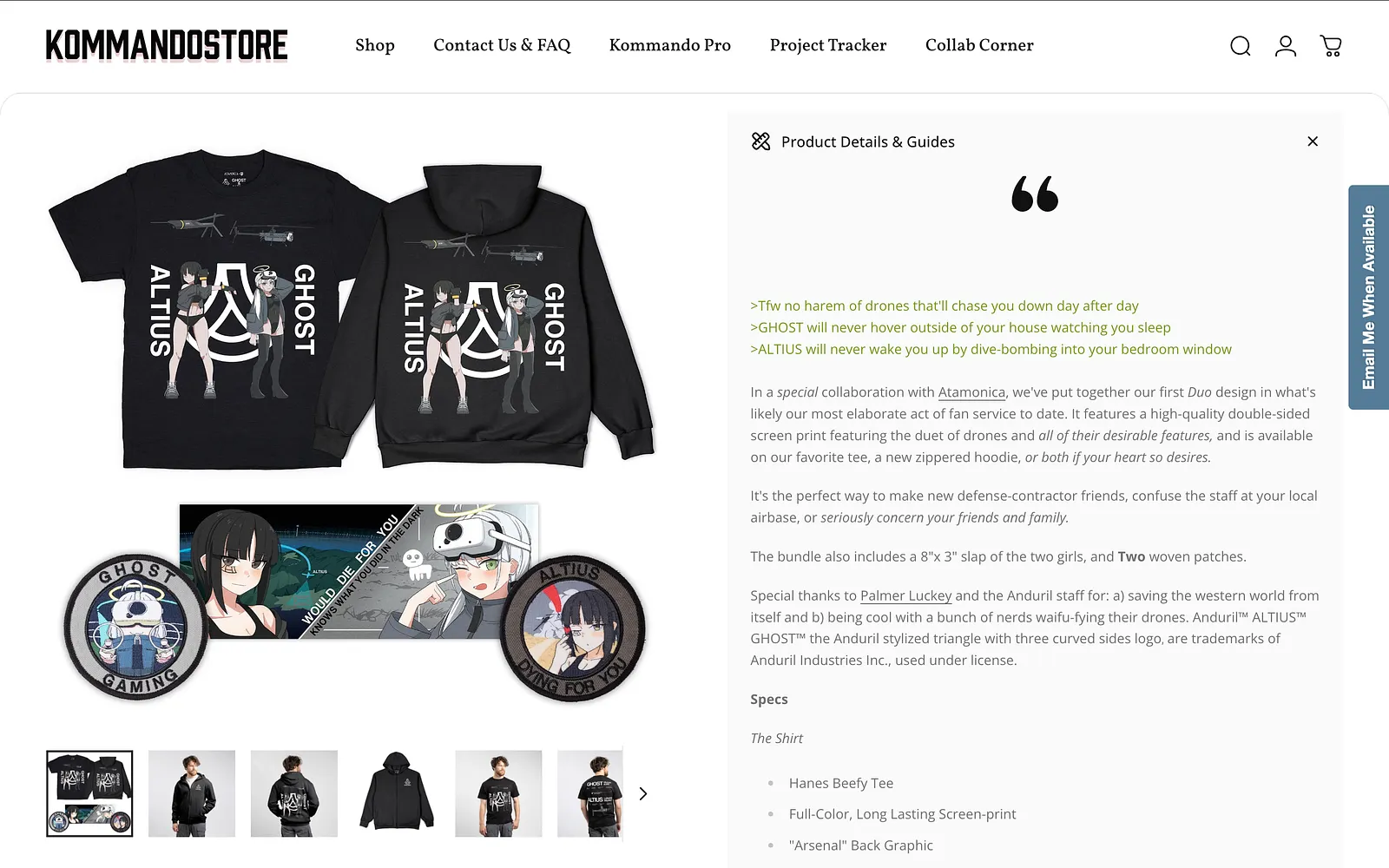
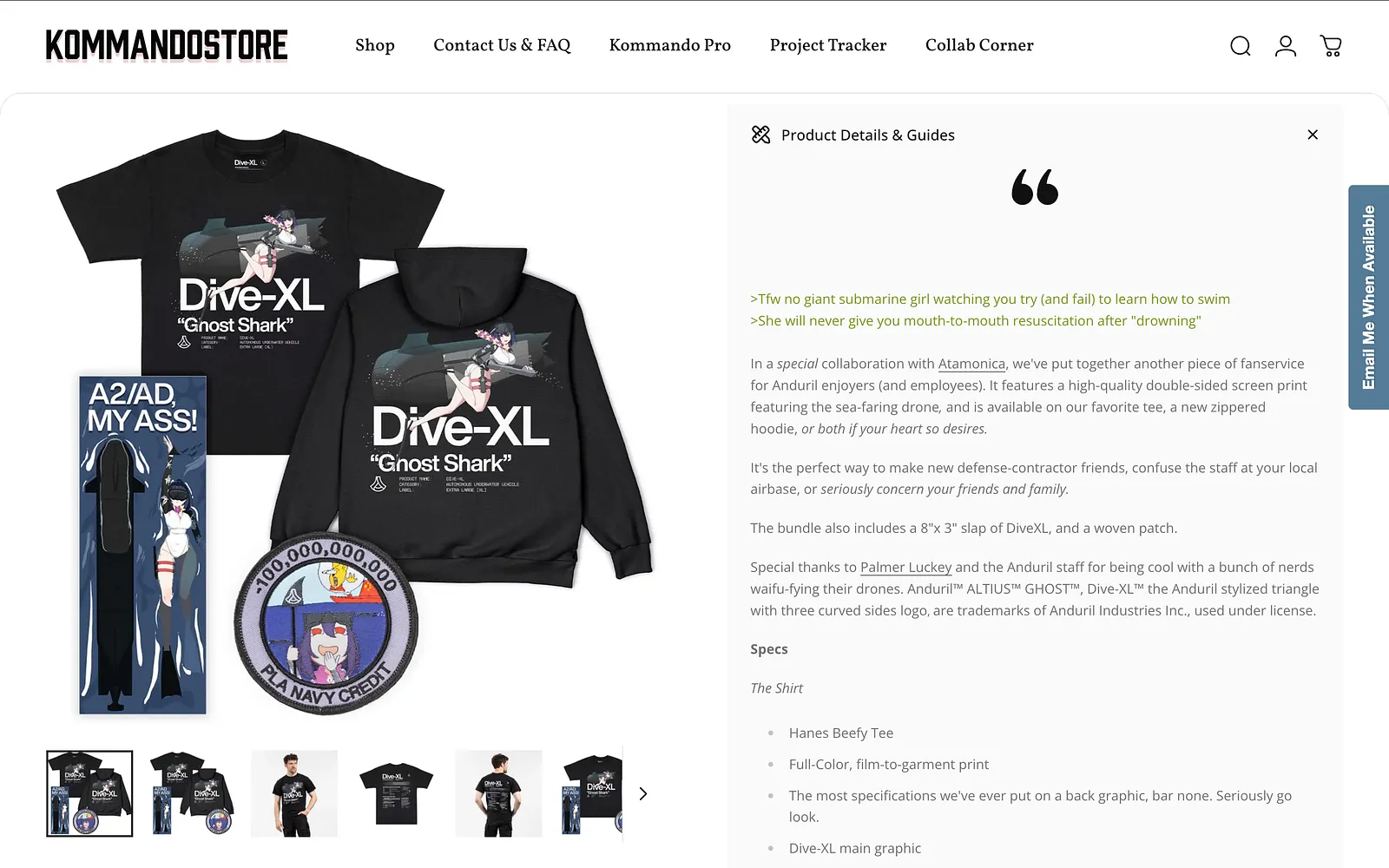
For those who had a good time in high school, a waifu is a fictional character — typically animated, generally Japanese — toward whom a fan directs sincere and proprietary affection. The term is a Japanese loan of the English “wife,” reimported back into English by Western anime and manga fans, and most often used as a jokey possessive. A waifu is not a character you merely like; she is your waifu.
The other operative word here is, of course, “cool.” While nothing gets out of an organization as large and highly-regulated as Anduril without surviving an exhaustive gauntlet of in-house legal counsel and internal review — something made clear by a follow-up line of sober legalese which clarifies that the Anduril name, product names, and company logo are all trademarks of Anduril Industries Inc., “used under license” — this note reframes the entire org chart as a single chill founder with a big green-light button. The most institutionally interesting thing about the Anduril Sisters collection is how hard it works to look like it never passed through an institution at all—which, for a company whose whole pitch is to break with the slow-moving conventions of established players, is almost unsettlingly on-brand.
The people on the other side of this collab are not exactly “establishment” marketing partners, either; KommandoStore’s founders started out reselling USMC backpacks to fellow /k/ommandos back in high school, and their partner artist, Atamonica, has been drawing airframes and ordnance as anime girls since at least 2022. For them, nothing here is new; the party that gets the most attention is the one doing the least work, and the Anduril Sisters are only a “collab” with their eponymous firm in the sense that Anduril allows them to exist. Branding people love trying to cast one-off marketing stunts as the tip of some imagined long-term 5-D chess strategy iceberg, and the resulting analysis is generally sloppy at best. Still, regardless of actual intent, this affords Anduril a second kind of deniability—a sufficiently chan-coded third party to point toward when someone asks whether they mean it.
Anduril has the budget, audience, and subject-matter expertise to do all of this in-house—which would also align with the broader ethos of vertical integration and onshoring championed by their contemporaries like Palantir and SpaceX. But by putting their waifus up for sale in someone else’s store, they get all the love and none of the scrutiny or blame for a move that, as far as all available records show, no other weapons manufacturer has ever signed off on. The nearest precedent is likeness licensing — videogame publishers paying gunmakers for the right to render branded rifles on screen — but that’s still just a sanctioned depiction of products as products. No one in this world has ever licensed a girl.
Intro to Weapons Waifus
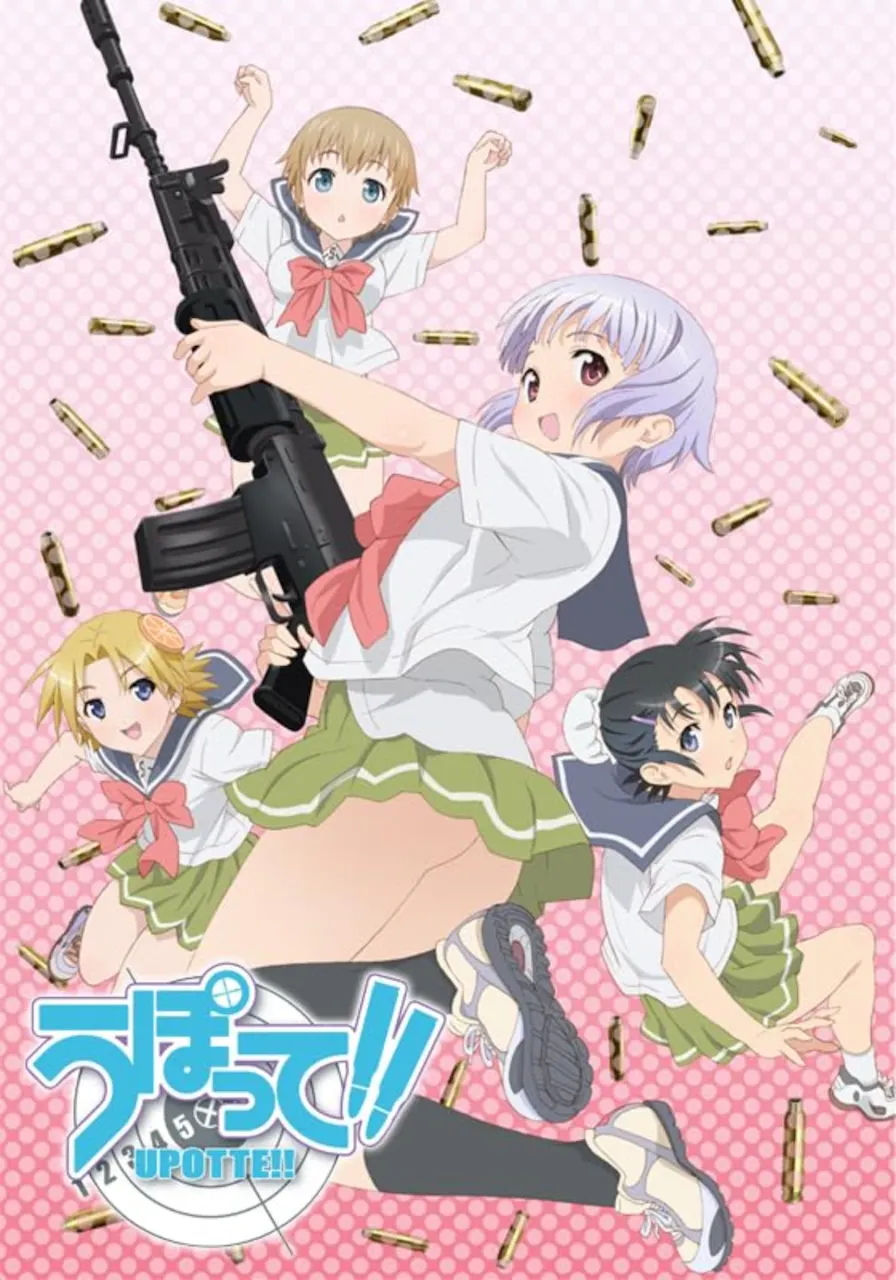
The biggest and longest-running “weapons waifu” tradition is fan work: amateur manga and one-off artwork that use kawaii — cuteness, childlike innocence, and simplicity — and moe — a feeling of affection evoked by certain fictional characters — to turn weapons of war into objects of love. This is perhaps best exemplified by the manga-turned-anime Upotte!!, which is set at a high school where the students are personifications of real military service rifles, as well as Atamonica’s own pre-Anduril airframe and missile girls. No manufacturer is involved anywhere in this lineage, nor have any ever been asked.
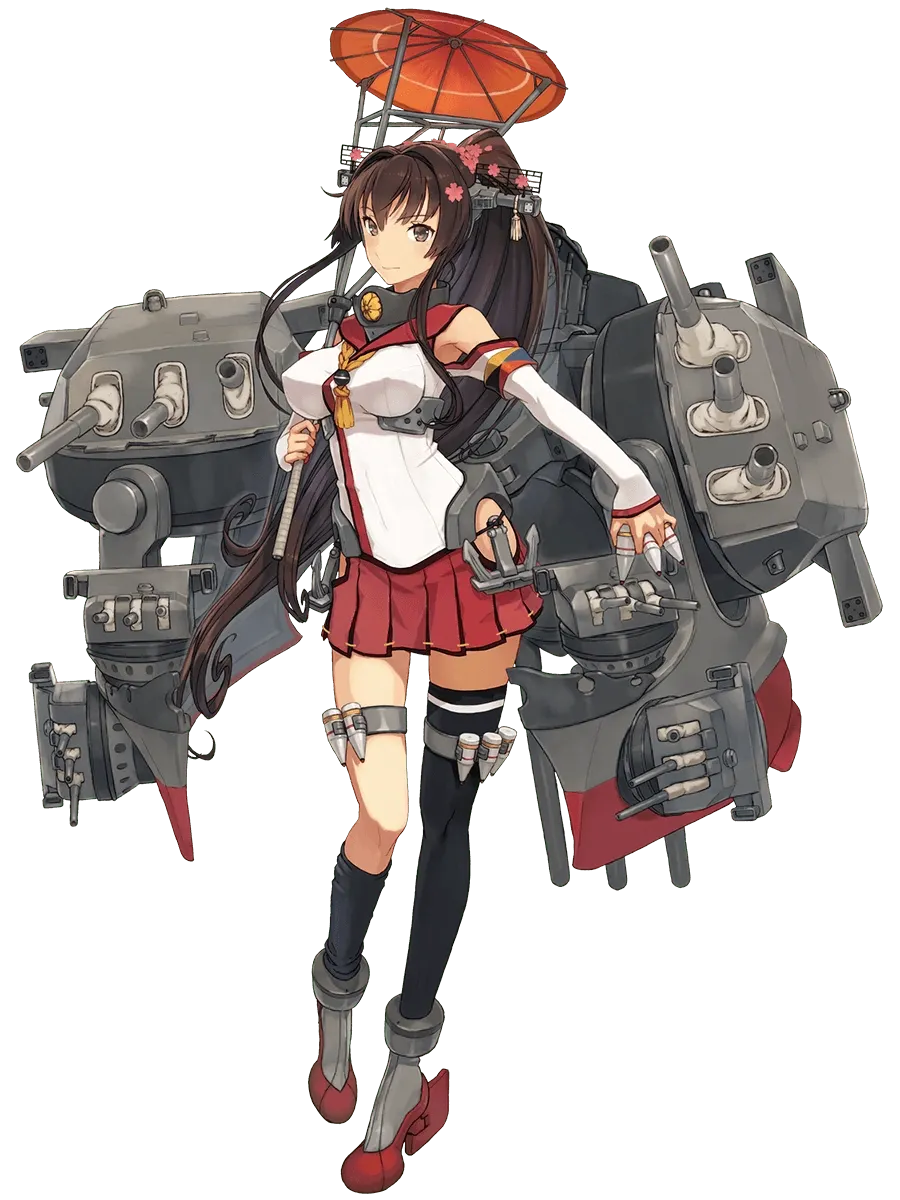
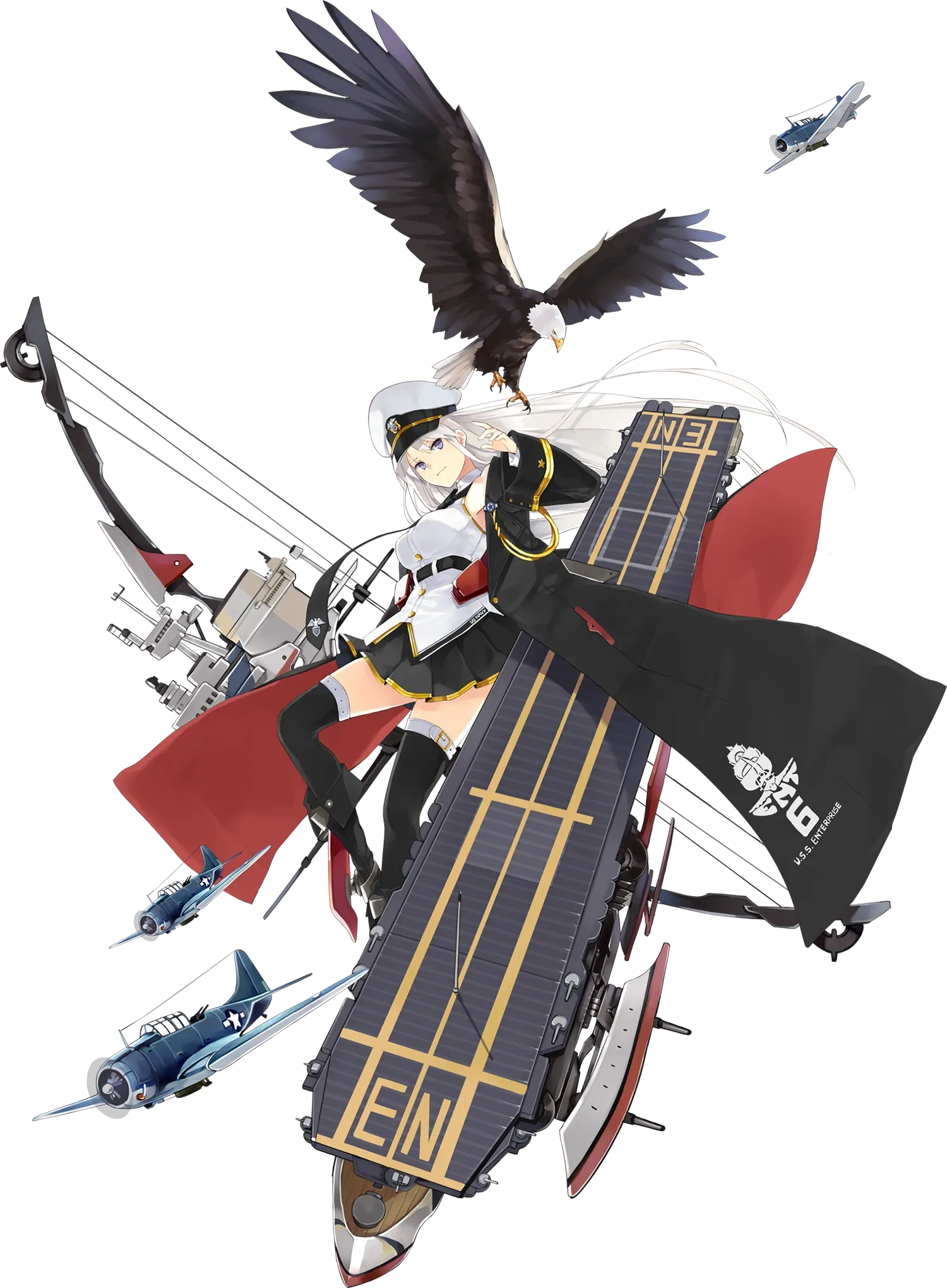
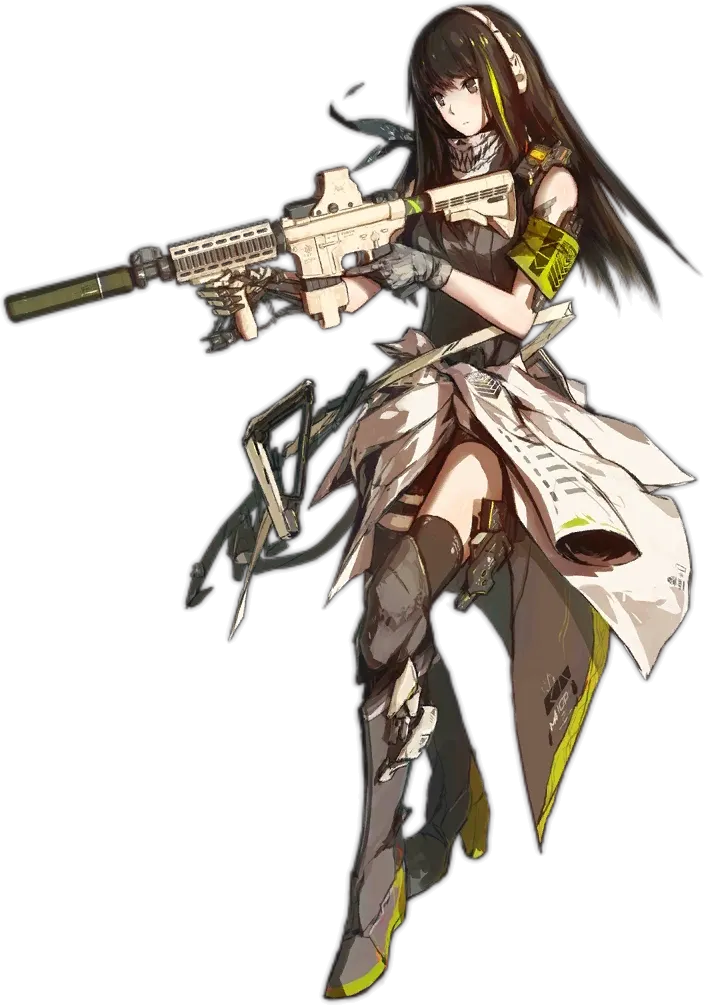
This fan tradition is not for lack of commercial interest: Kantai Collection, Azur Lane, and Girls’ Frontline are all enormously successful games built around anime personifications of real military hardware, and none of them are licensed, either. Girls’ Frontline pulls its characters’ names straight off IRL spec sheets, while Azur Lane’s only hedge is to assign real ships to thinly-fictionalized navies. Many also benefit from some degree of historical distance; no one is going to push a copyright claim over a battleship that sank in 1944, nor could its builders endorse it even if they wanted to.
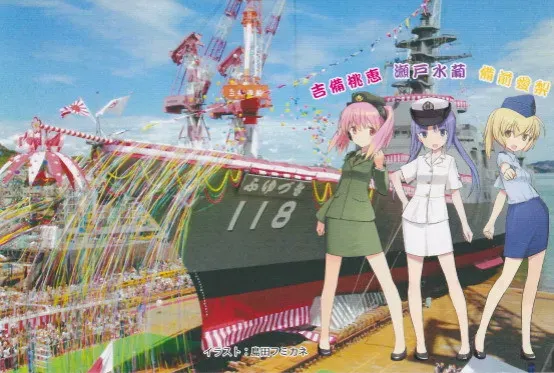
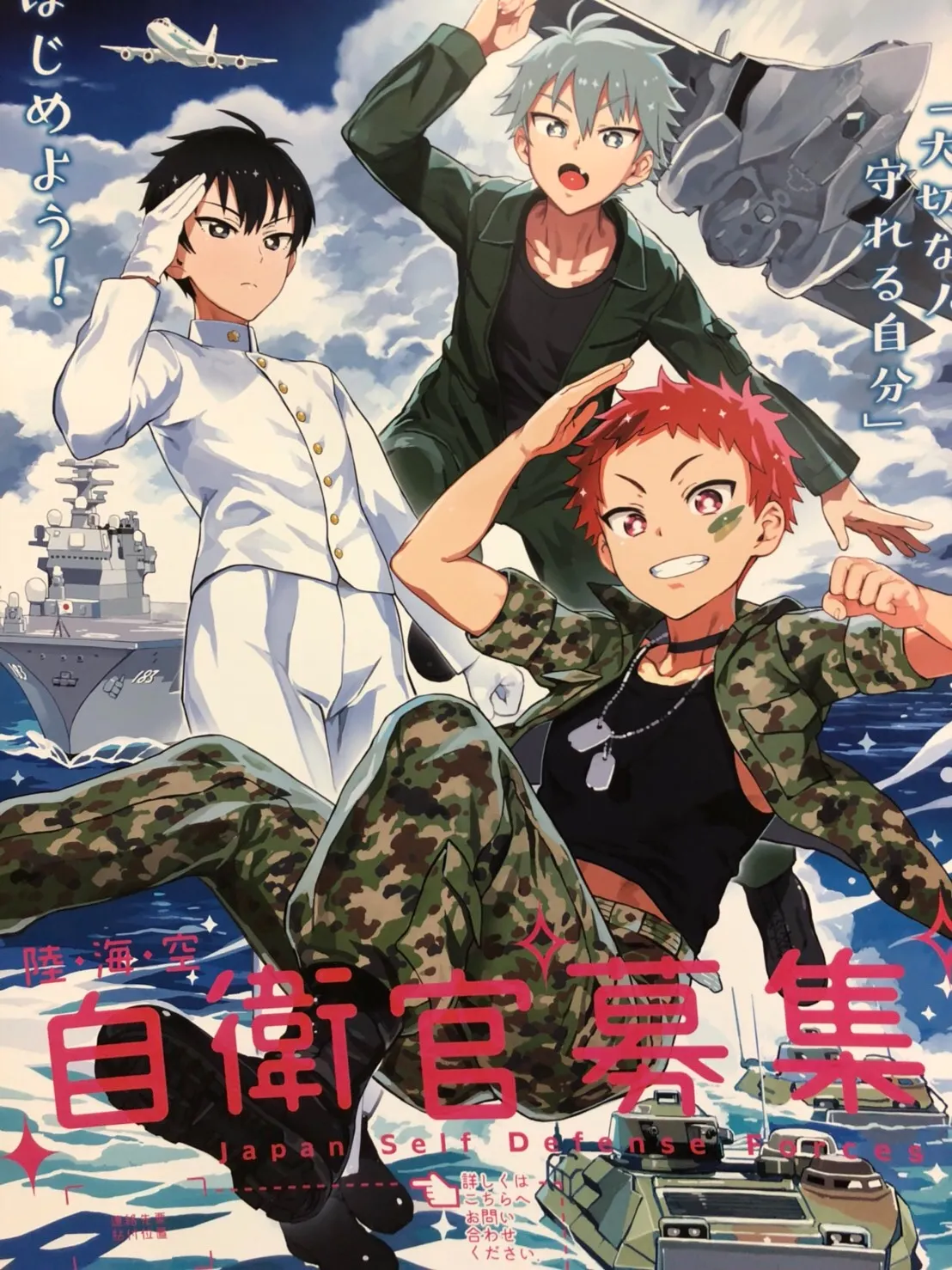
Another related tradition exists, though it’s a cousin or an uncle at best: the one practiced by national militaries themselves. Japan’s Self-Defense Forces have been running moe recruitment ads for well over a decade; in July 2013, the Okayama Provincial Cooperation Office debuted a trio of anime girl mascots to represent their Ground, Maritime and Air branches, and many other cooperation offices have since followed suit. Recently, they’ve even tried courting the furry fandom with characters like Omaneko, the cat-boy mascot of the Omaezaki Sub Base. This tradition extends beyond Japan, too; a chunk of the U.S. Army’s 2021 “The Calling” campaign is cast in an arguably anime-inspired animated aesthetic, and anime girl service posters made by current and former service members periodically go viral. However, all of the waifus in this category are personifications of specific military branches rather than specific military weapons—and it all comes back to institutions recruiting for themselves in countries where the institution is the customer rather than the vendor.

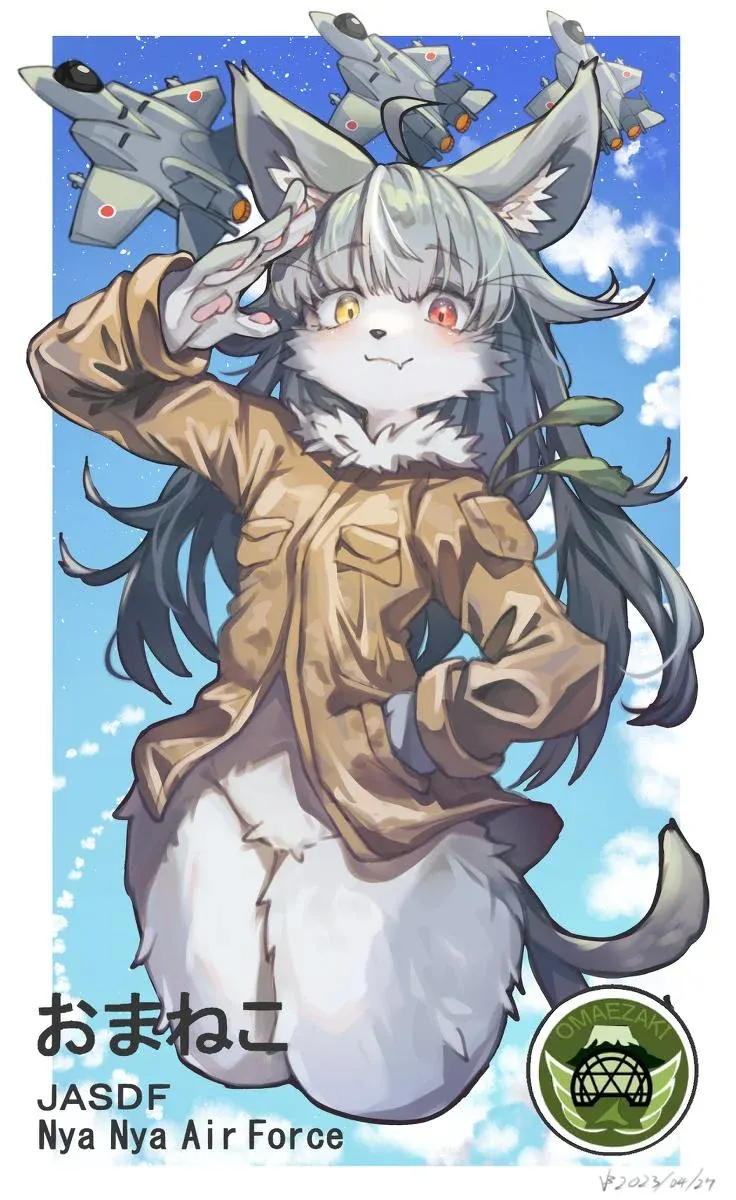
All of this is to say that people have been drawing weapons and elements of militaria as anime girls for a very long time. What is new about the Anduril Sisters is that they exist with the blessing of their referents’ manufacturer, which has incorporated them into its revenue stream through merch. That, in turn, gives Anduril’s blind-box “relics” — which are bought and sold on the company’s own online store — a strange air of utility. After all, when it comes to waifus, gacha is where the real money gets made.
Anduril’s forays into anime culture don’t end here; last year, the company announced its Barracuda cruise missile with an unmistakably Evangelion-flavored launch trailer featuring a faceless man in a Hawaiian shirt (presumably Luckey) reading a newspaper article about a potential U.S.-China missile gap before cutting to a NERV-style missile assembly factory. Luckey is not shy about his own place in all of this, sometimes describing himself in the press as a “propagandist,” and his own politics — which some argue got him fired from his job at The Company Formerly Known As Facebook — are a similar deal. Around the launch of the Barracuda, he summed up his views in a headline-ready tweet: “I don’t think the United States needs to be the world police. It needs to be the world’s gun store.”
Corpse Disposal
Many in-house marketing teams exist to soften awareness of one specific ugly truth. The average fast food brand would very much prefer you not to think about factory farming, the average apparel brand would very much prefer you not to think about child labor, and the average social media brand would very much prefer you not to think about the mental health of teenagers. For defense-tech marketers, the truth is even uglier: if their products do what they are built and sold to do, the picture they’re painting will always include a literal corpse.
Most of the responses to this problem involve getting the corpse out of the frame; the only question is how. The standard options are removing detail, using different words and directing focus to the product’s craftsmanship instead—and in all of these cases, the body leaves the frame while the frame itself stays put. Most ads from the so-called “primes” have all three countermeasures running at once, with verbs like “engage,” “deliver,” and “defeat,” and nouns like “targets” and “effects.” Everything in the picture is either a machine or a professional operator, and the thing at the product’s business end is a coordinate.
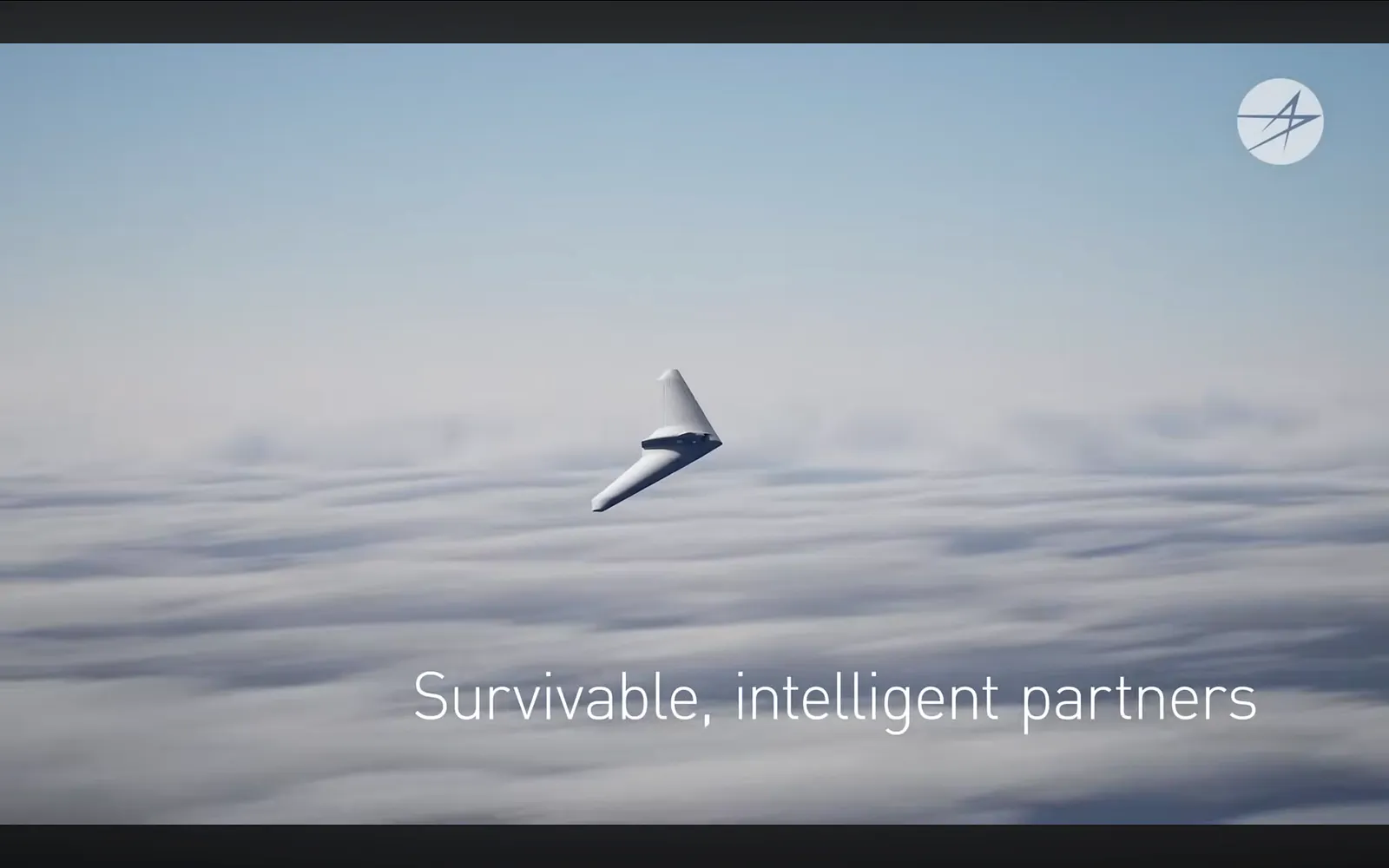
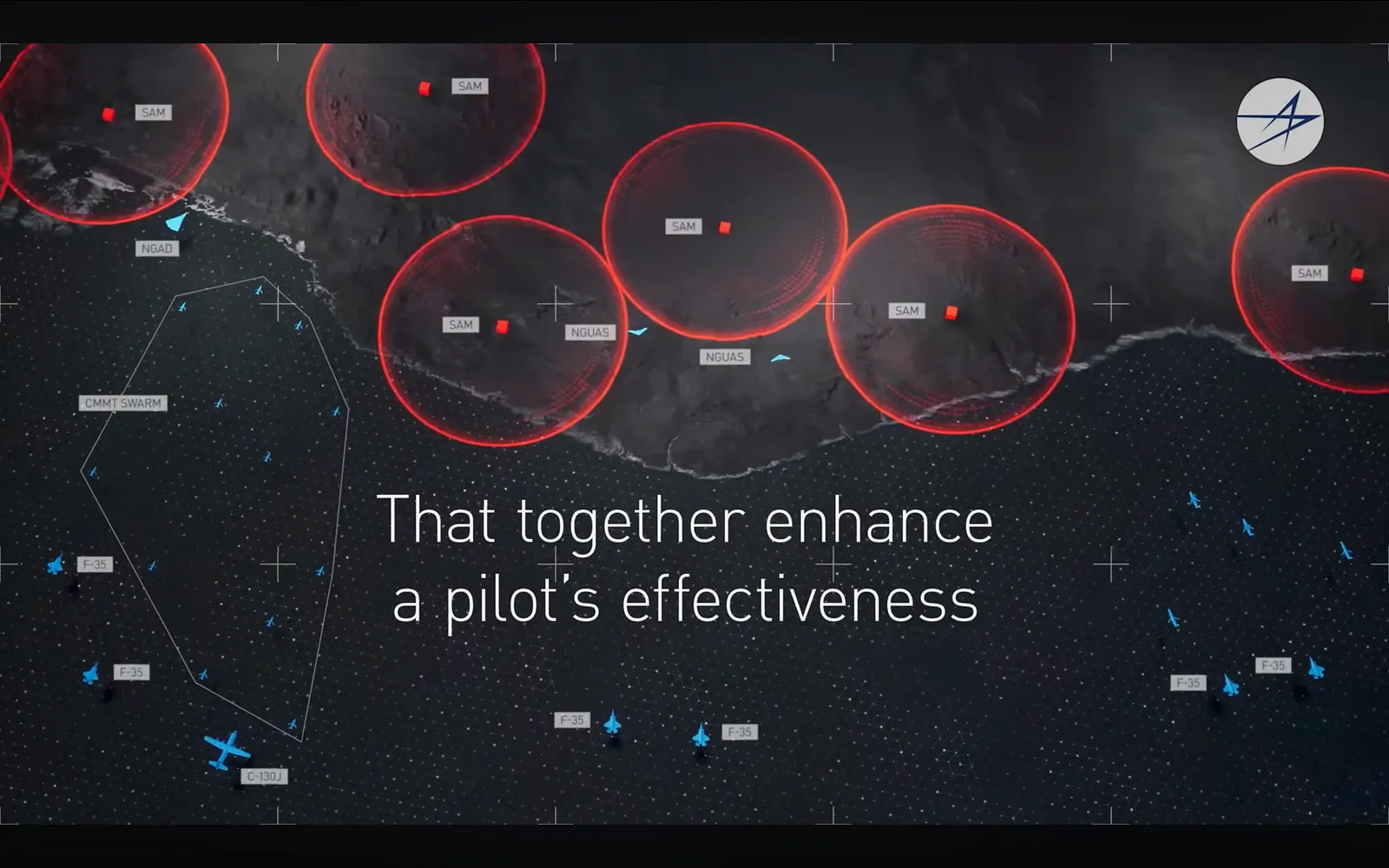
Anduril opts for a different path: substitution. Across every bit of “Anduril Sisters” promo material, the target becomes you—which reframes the product’s performance as an embrace. The clearest and least varnished version of this swap happens in the tie-in visual novel, where Ghost remarks that the viewer would be surprised how much latitude she’s given for “extrajudicial killings of nosy NEETs” before announcing that her sister ALTIUS is about to “turn you into a protein shake”—all with Anduril’s trademarks running under the credits.
While a cartoon girl whose referent is a semi-autonomous suicide drone is grotesque in a way that no amount of media literacy and cultural coding can or should conceal, “she” offers no disclaimers about what’s being wanted. The only outright lie is where that wanting lands. The obvious reading is that the Sisters’ cutesy anime faces are meant to hide the grisly truth behind them, but the collection’s deniable framing makes it clear that things are not so simple. If they are covering for anyone, it’s their audience.
Greentext does not conceal anything; its utility lies in stating things openly while leaving their sincerity unresolved. In much the same way, the Anduril Sisters don’t hide desire—by the logic of deniable sincerity, they are desire. They don’t run cover for what their hardware inspirations are built to do, either; the ALTIUS merch’s promo copy is almost shockingly blunt by contractor standards for its naked use of the phrase “dive-bombing,” and the visual novel offers no shortage of equally-loaded lines from start to finish. Once the Sisters have swept the site of the drone strike clean of Anduril hardware and vanished into the night, the protagonist is left alone with bruised ribs and the burning wreckage of his mom’s car. Then, after a beat, we get one more glimpse into his head that bundles deniability and confession together in just five syllables: “Why am I aroused?”
Loving the Bomb
Again, much of what is happening here is not new; beyond the aesthetics of the Anduril Sisters, the desire they are meant to tap into has plenty of existing outlets. America’s libidinal relationship with its own arsenal has been running at full steam now for the better part of a century, from nose art on WWII bombers to civilian airshows to the Top Gun franchise. But most of the channels developed to absorb and filter that desire have allowed it to be passed off as something less overtly perverse, like patriotism or an appreciation for engineering.
I am, as ever, powerless to resist invoking the word “alchemy” whenever the opportunity presents itself, so let me try to earn it. By virtue of the sheer logistical and resource demands that go into their creation and maintenance, weapons systems like Dive-XL and ALTIUS are definitionally instruments of the state: funded, built and technically owned by an abstract accumulation of people you’ll never meet. But when you paint a cute girl’s face on that weapon — or draw the weapon itself as one — it becomes the private property of your heart. The anthropofeminized weapon doesn’t ask to be operated; like a waifu, it is something to be kept.
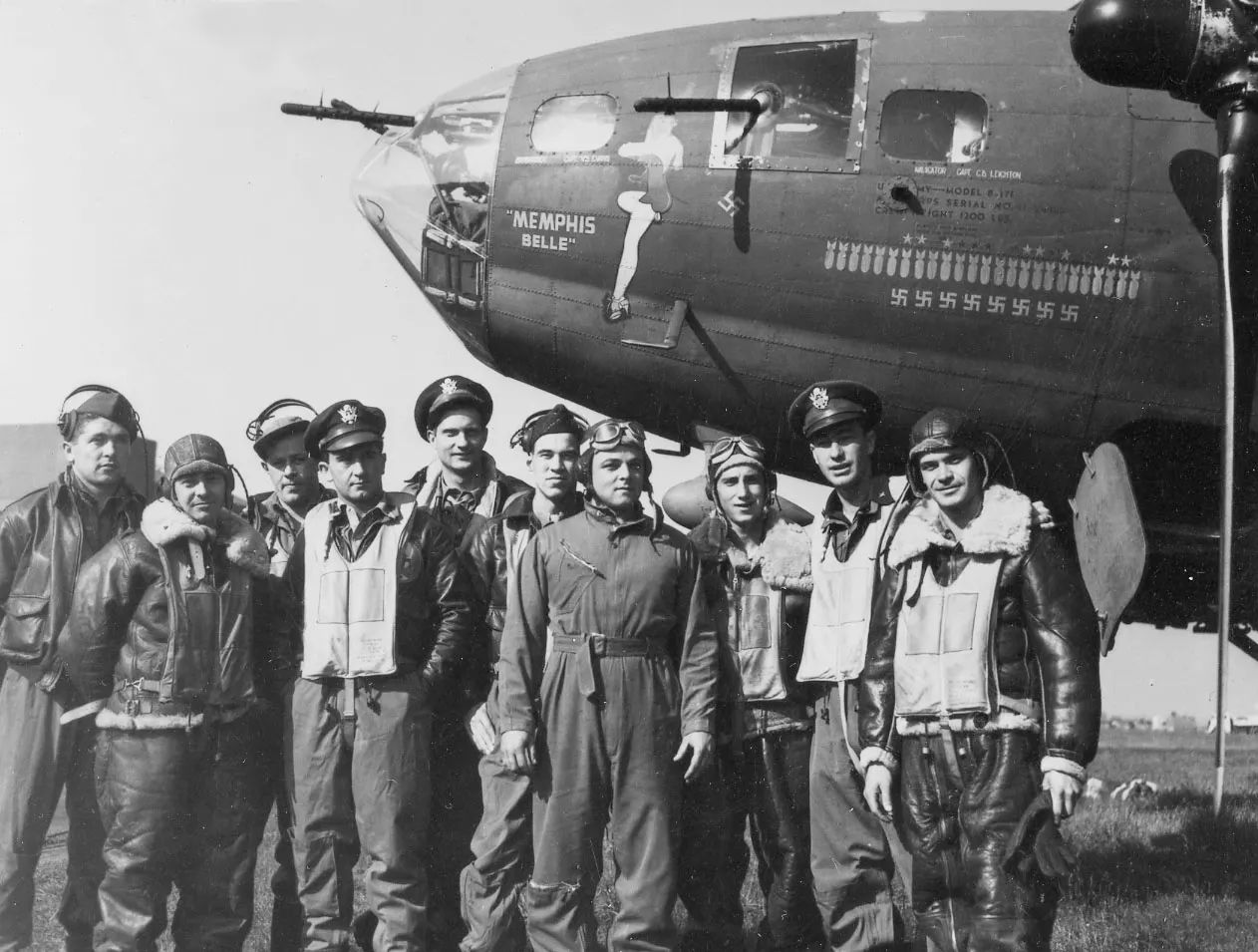
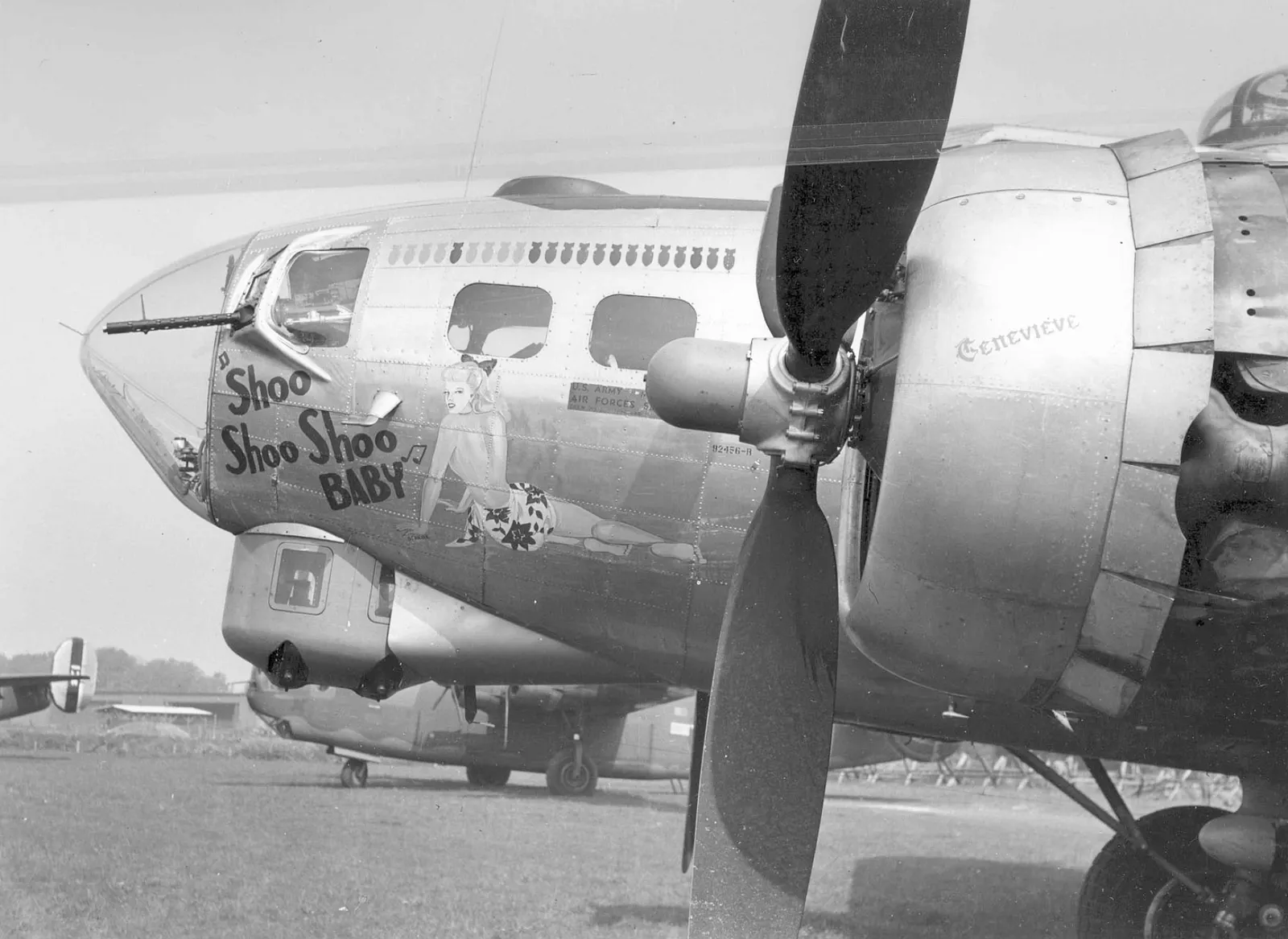
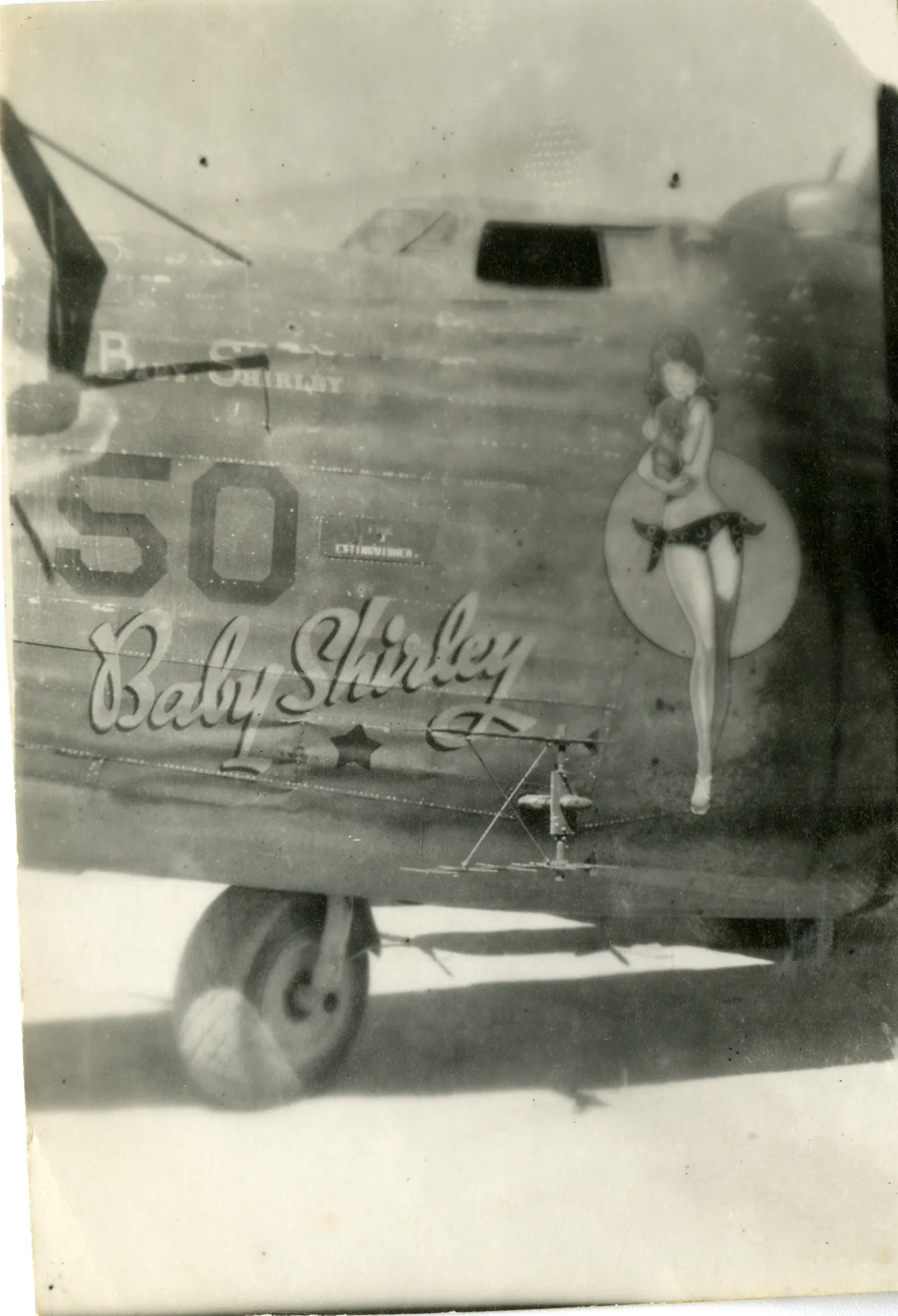
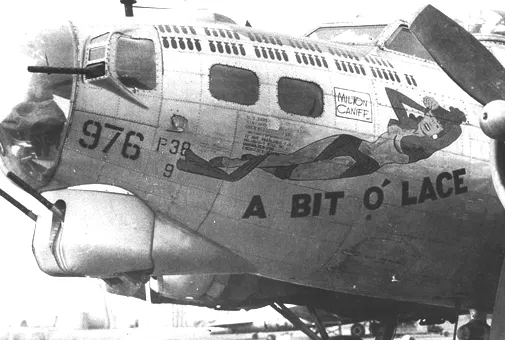
The most famous instance of this phenomenon, WWII bomber nose art, emblazoned government-owned-and-operated murder machines with pictures of somebody’s real or imagined sweetheart. Historians at the National WWII Museum describe the practice in exactly these terms—personifying and anthropomorphizing the aircraft. Like most “weapons waifu” drawings, it might also best be understood as a folk art tradition; nose art was made by crews and base sign painters, it was frequently against regulations, and the Navy forbade it outright. The surviving examples we know today owe their continued existence to their clear utility—certain officers indulged the behavior because it helped the machine’s operators climb in, run after run. We are talking about an engine that turns state violence into personal devotion, and no one in its lineage, from the painter of the Memphis Belle to Atamonica, has ever had any illusions about the gender of the intended recipient. What Anduril has done is to take that engine, which ran for eighty years on unauthorized enthusiasm, and issue it a trademark license.
In the 1936 version of “The Work of Art in the Age of Mechanical Reproduction,” Walter Benjamin argues that humanity’s self-alienation has reached the point where it can experience its own destruction as aesthetic pleasure, and names the aestheticization of politics as the key signature of fascism. Everything I’m saying here arguably comes back to this foundational bit of thinking—but what has changed since 1936 is a matter of scale, scope, and venue. Benjamin’s fascism works from above on the masses through rallies, parades, and war staged as an art object; the Anduril Sisters work through a storefront, aimed at a fairly specific type of guy. If fascism aestheticizes politics, Anduril’s merch is the aestheticization of procurement.
Cutesy Warriors
The other thing that’s new for the world of American defense contracting is the uniquely Japanese spin on this form. America has been anthropofeminizing its weapons since at least the Second World War—but what it hasn’t done before, in any manufacturer-licensed capacity, is waifu-fy them. While the amateur nose art on the B-17 Memphis Belle had a real human referent, the officially sanctioned Anduril Sisters have none. In the sense that a member of a fandom might use the term, they are original characters.
The tidy version of the Japanese spin I’m talking about goes like this: when Japan relinquished its ability to field a true standing army or declare war on any other country, it channeled all of its latent military desires into cute drawings. But in truth, the forms of personified warships and anthropomorphized weapons long predate 1945 in Japan. What the postwar settlement really changed was what those forms were for.
Sabine Frühstück’s Uneasy Warriors is useful here for the way it explores the strange legitimation problems faced by the Japanese Self-Defense Forces since WWII: the JSDF is an institution that must be publicly legible as something other than what it is, because what it is has been constitutionally negated. This is why it often reaches for the register of cuteness, which creates a strikingly clean link to the rest of “weapons waifu” culture. When Okayama’s recruiters debuted their three mascot girls in 2013, the character designs came from Fumikane Shimada, who also worked on Strike Witches and Girls und Panzer.

Girls und Panzer is an anime in which WWII-style tank combat is practiced as an extramural sport between all-girls high schools, and it deserves a brief diversion here for the way that it exemplifies the signature move of most “weapons waifu” media: rendering its chosen weaponry with rivet-to-rivet mechanical accuracy while evacuating all associated violence. While every Panzer IV and Tiger in the series is bristling with impressive detail, no one ever dies while piloting one in a game of “tankery.” All overtly political iconography is similarly sterilized: the flag of the USSR-inspired Pravda High is a pair of L-shaped rulers overlaid with a T-square, mimicking the shape of a hammer and sickle with a much less charged, academic set of tools. What sets Anduril’s waifus apart is the way they lavish that same fidelity onto live weapons systems and leave their killing power and any resulting corpses in-frame.
The closest thing to a genuine precedent for the Anduril Sisters comes from this same milieu: in 2011, Japan’s Fourth Anti-Tank Helicopter Squad painted a moe girl called Aoi-chan on the side of an AH-1S Cobra. She was subsequently given three sisters, each with their own attack helicopter, before the whole family was retired in 2013. Still, the distinction described earlier survives. Aoi-chan is much closer to the Memphis Belle than Ghost and ALTIUS: the airframe itself is a canvas, the artist is the operator, Bell and Fuji Heavy Industries were not involved, and no money changed hands. This stands in contrast to Anduril’s Sisters, who are not painted onto their referent hardware but created as commodified personifications of that hardware. The only places they’re drawn are within promotional content and materials made and sold by arrangement with the firm currently trying to move said hardware.
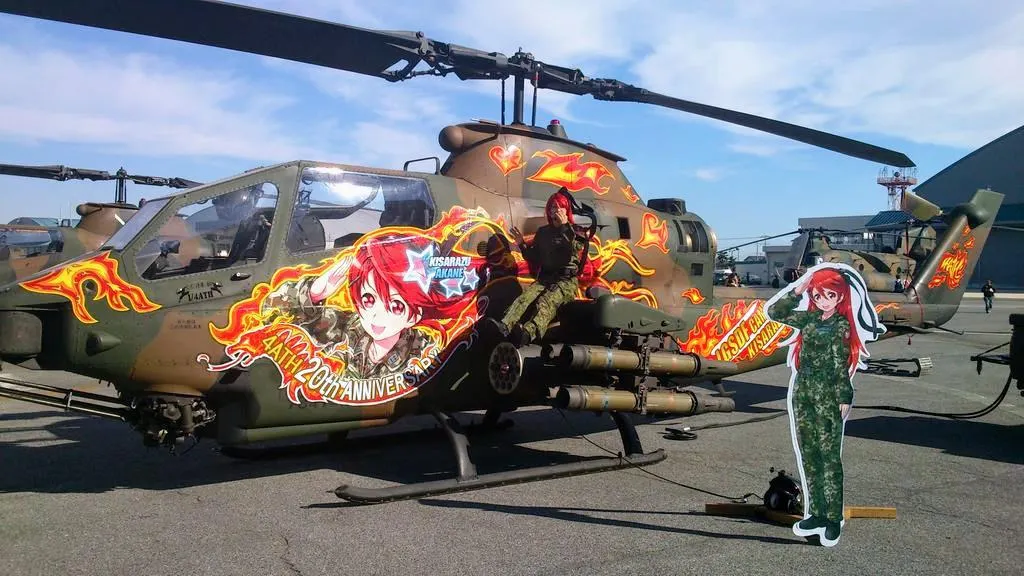
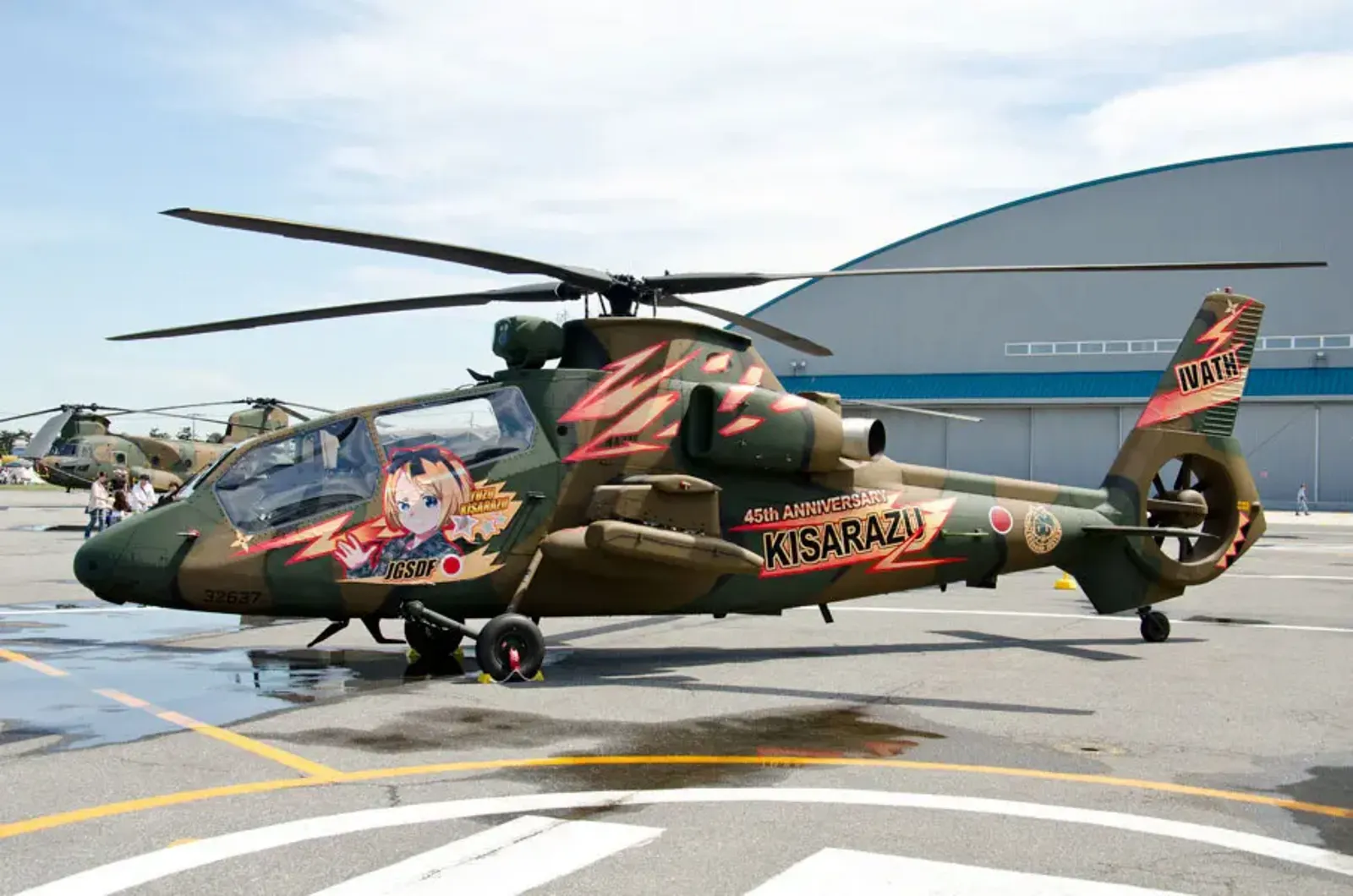
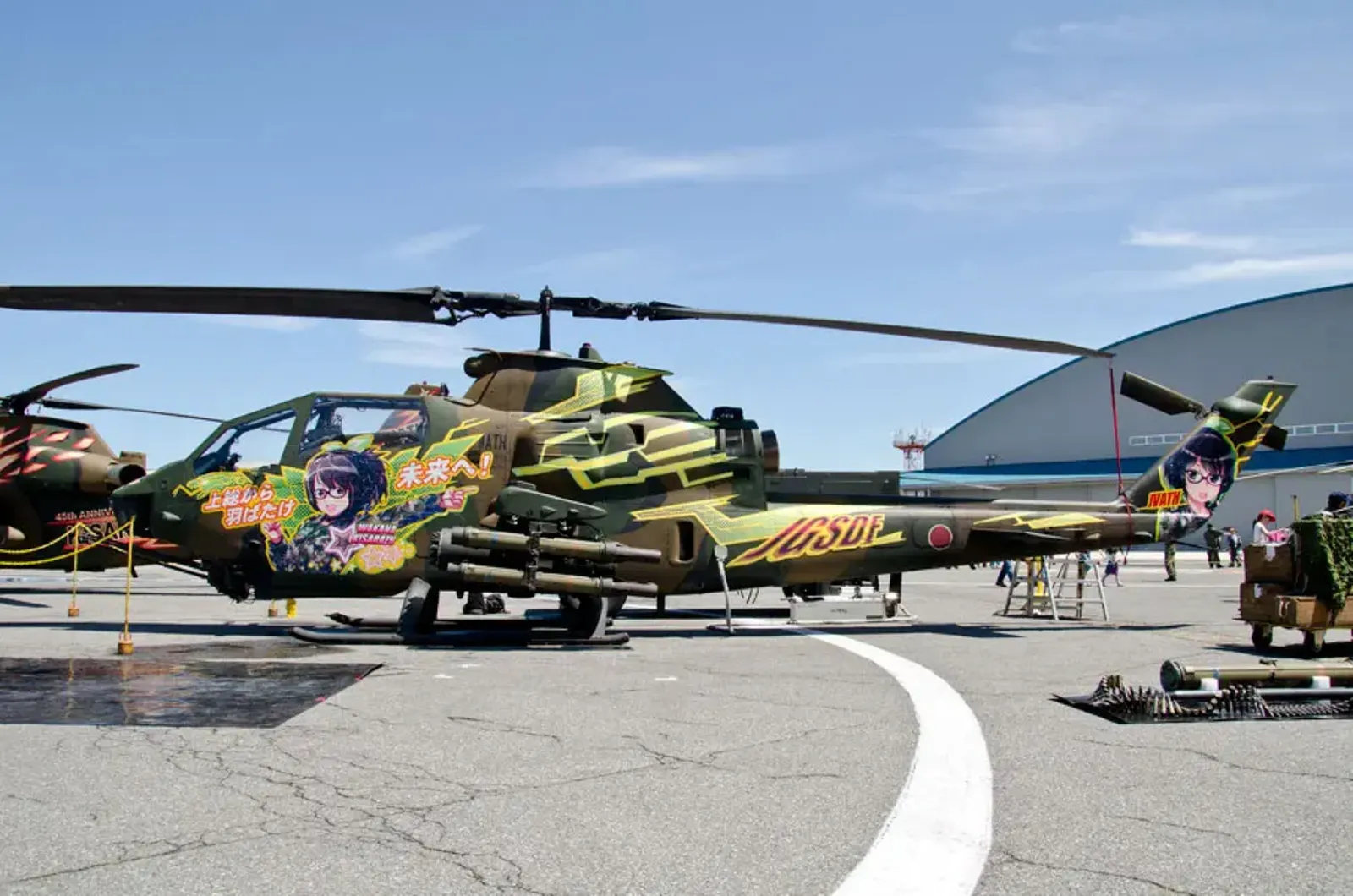
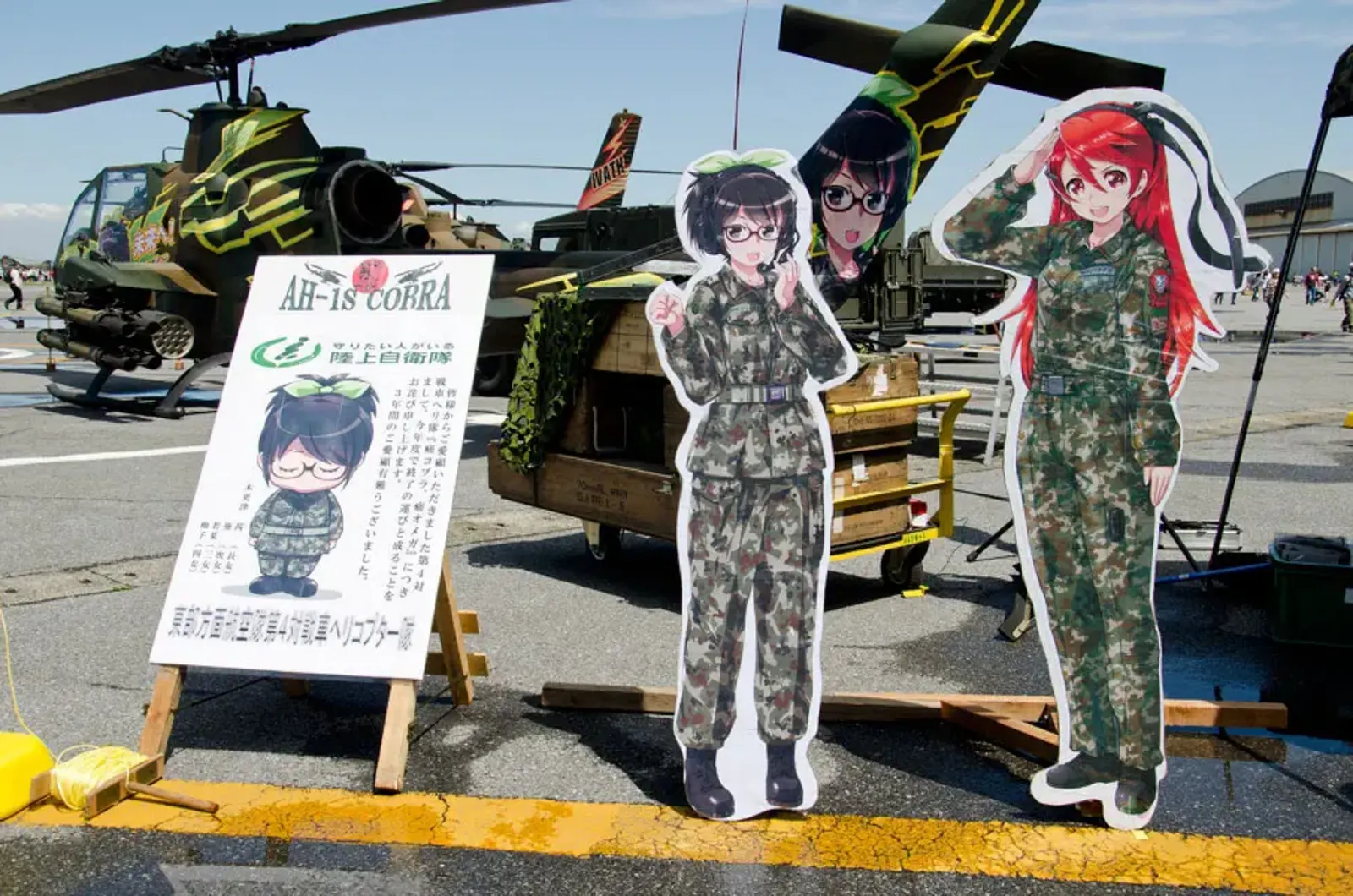
Both the JSDF and Anduril have experimented with aesthetics that let them be seen as something else, under opposite constraints. Japan’s military isn’t permitted to appear as itself, so a substitute register has to be built from scratch. Meanwhile, Anduril is a product of the most heavily and unapologetically armed society in human history, and there are no laws on the books that forbid it from depicting itself as itself. The problem it still faces is that this depiction lacks a universally socially acceptable register. One isn’t allowed to be seen at all, but the other isn’t allowed to be enjoyed—especially in the rooms where defense-tech does its hiring.
In much the same way a MAGA hat reads as patriotic in one zip code but disqualifying in another, expressing an open affinity for the U.S. military and the weapons systems it employs is an increasingly socially fraught endeavor—and the person Anduril needs to reach here is not a persuadable voter in Ohio, but a recent MIT or Caltech grad weighing how much accepting a job offer will cost them socially. Ever since Google’s own employees forced the company to walk away from a project with the Pentagon, social permission inside this talent pool has been a hot-button issue. What this calls for is a third form of deniability: a register of performance that allows enthusiasm to be expressed in carefully hedged terms that don’t cost you the room. This is precisely the kind of murky, non-binding soil that deniable sincerity needs to thrive.
Militarized Fandom
In a previous entry of this newsletter, I wrote about how Warhammer 40,000 rewired my ten-year-old brain—and how since then, I’ve invested thousands of hours of private cognitive labor into the 40k universe. What stopped my scroll when I first saw Anduril’s “relics” was the feeling of hearing my own language spoken back to me—so when I say that Anduril’s marketing worked on me, it should be read as both a disclosure of bias and the only real credential I have to write a piece like this. The Sisters and their relics are not aimed at some hypothetical reactionary neckbeard cooked up in a strategy meeting. They are aimed, with professional and unsettling precision, at me.
Because everything after this depends on the idea of fandom, I’d be remiss not to offer my own working definition. A fandom is a group of people who perform unpaid cognitive labor — fan art, memes, posts, lore — on behalf of an object, up to and including defending that object against outside criticism without prompting. More detailed interpretations exist, and are worth mentioning, too: Henry Jenkins sees fans as agents of a participatory culture that makes meaning from below, while Tiziana Terranova sees them as free labor whose enthusiasm gets harvested as surplus value. Most fans side with Jenkins, most marketers with Terranova. For better or worse, I’ve been both.
Aesthetics aside, there’s another deeper truth that needs acknowledging here, too: weapons have fandoms, and they probably always have. Humans — generally, guys like me — feel things toward the tools and systems that we create to murder one another that are similar to and at times completely indistinguishable from love. And while most of the organizations involved in selling those weapons have historically put a great deal of effort into avoiding that fact, Anduril appears to be confronting it head-on: you want the bomb? Here she is; she has a name, and sisters. I find this to be a far more honest answer than the standard set of abstractions and euphemisms that other defense contractors tend to reach for. It is also a great deal more alarming.
To Kill a Warthog
All of this sets up an obvious objection: weapons fandoms exist, at enormous scale, and there’s very little evidence that any of them have ever moved a single dollar.
No piece of military equipment demonstrates this problem better than the A-10 Warthog, a notoriously slow, heavy, and adored close-air-support attack aircraft that the Air Force has been trying and failing to retire for over a decade. From its “ugly” look to the infamous “BRRRRT” of its nose-mounted autocannon, the plane’s various idiosyncrasies make it a natural meme engine, and it has appeared in over 40 video games since the 1980s. It even has a waifu, drawn by the same artist behind the Anduril Sisters; long before the collab that inspired this piece, Atamonica drew her — along with the B-2 and Sidewinder — with no license, approval, or trademark line. Not that there was anyone at Fairchild Republic to ask; the corporate entity that originally built the plane was absorbed into other companies decades before anyone thought to personify it.
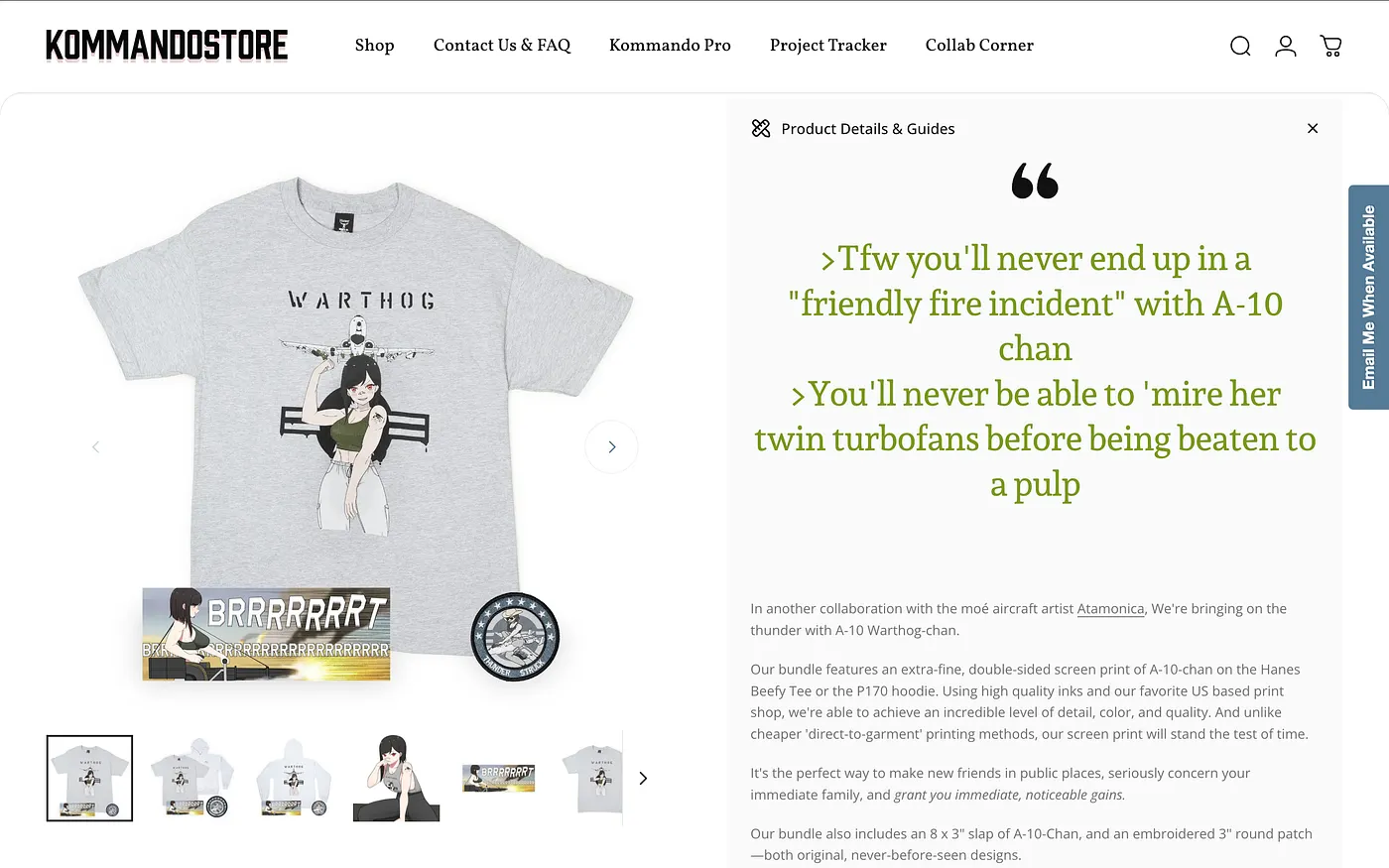
The A-10 seems to have friends in high places, too; Congress blocked efforts to retire the aircraft in 2015, 2016, 2017, 2021, and 2022, and, more recently, bargained the Air Force down from sunsetting all 162 remaining A-10s to only divesting 59 by 2026, leaving a mandated floor of 103. Fittingly, several of these rescues were led by Rep. Martha McSally — the first female pilot to fly a Warthog in combat and representative of AZ-02, which once included the base where A-10 pilots trained and which anchors a $991 million slice of the local economy — although she’s now been out of Congress for almost six years and the blocks haven’t stopped coming. The coalition behind the plane has always been larger than the regions with direct financial incentives to keep it in the air, which largely comes back to emotional appeal; this is the ugly plane that shows up to “save our guys” when they are pinned down, flying low and eating hits so the infantry doesn’t have to. That built-in alibi is what lets a member of Congress from a state with zero Warthogs vote to protect a big, expensive base on the other side of the country without looking like they’re selling their constituents short.
Of course, this alibi belongs to the plane’s mission, not its fandom. An Ohio congressman can justify a pro-Warthog vote as a pro-close-air support move without ever having seen a “go ugly early” meme, because the argument and the meme run on the same source material. A weapon whose job reads as protective has a lot going for it in this sense, and it’s clearly enough to attract both a voting bloc and a fandom—as of this writing, lawmakers are currently seeking to extend the A-10’s lifespan well into the 2030s through the “Bolstering Recognition, Resurgence, Retention and Remembrance of the Thunderbolt” (read: BRRRRT) Act. While it’s tempting to label this as an instance of fandom vocabulary actually moving dollars, the meme still relies on a mission that the War in Iran has recently thrust back into the spotlight. And on a long enough timeline, even that may not be enough.
What the Warthog really shows is the size of Anduril’s problem, especially for systems like ALTIUS: whatever justifying vocabulary the hardware ends up with will have to be manufactured, because it doesn’t come with any on its own. In every story told about the A-10, it exists to protect and save soldiers from someone or something else. A loitering munition has no protective alibi; its capabilities are purely offensive, and it’s hard to argue that its presence saves any lives. Careful viewers of KommandoStore’s tie-in visual novel could object here and point out that the Sisters are written less as pure killers than drill instructors: they spare the protagonist, clean up his mess, and exit on Ghost’s suggestion that “maybe the kid can learn something from this.” The target, you, is found, fixed, assessed, and provisionally spared—which is the substitution mechanism as designed. But a drill instructor is still not close air support. The A-10 got its alibi free with its mission profile and still took half a century to acquire a fandom—which goes a long way toward explaining why a company might try to build such a fandom on purpose rather than waiting and hoping for one to show up.
The Mechanics
The useful question here isn’t whether feelings can actually move appropriations, but what a fandom would require to start behaving like a constituency. When viewed as the sum of its parts, Anduril’s marketing efforts seem to be laying the groundwork for a viable case study. We have:
An object of affection with a name and personality. Technically, as of this writing, there are three.
A retail layer where you can convert your feelings for the object into membership. This is where the Anduril Sisters meaningfully diverge from the likes of the Memphis Belle, which never offered its pilots any way to literally buy into it.
A deniability layer that lets you broadcast your affection at no social cost. Promotional copy frames official weapons waifu merch as a wearable bit, rather than a political badge you have to defend.
Collection and scarcity mechanics that produce repeat engagement. In this case, rarity-scaled, gacha-style blind boxes.
A clear, if unstated, invitation to produce. As “branded content,” Anduril’s tie-in visual novel and anime launch trailers are more prompts than promos — the former quite literally models the exact fan it wants — and fan art, memes, and lore are what turn a fandom into a self-sustaining ecosystem. Those things can be astroturfed, but astroturf can’t sustain itself; without organic uptake, the ecosystem ends when the budget does.
A product funded through congressional appropriations, which are decided by elected representatives, who are selected by civilians.
None of the first five parts on this list are unique — Harley-Davidson has had them all for decades — and part six describes Lockheed just as accurately as Anduril. But every previous version of this machine shares one feature that Anduril’s lacks: the fan is also the customer. Harley fans buy Harleys, but an Anduril fanboy cannot buy an ALTIUS; however sincerely a fan may love “her,” the referent is not for sale to him. There’s even a joke about this in the visual novel, with the protagonist fretting about getting raided by the government for illegally acquiring military hardware.
In that context, these six parts create a mechanism that sits completely outside conventional business-to-consumer dynamics; this is a merch machine that does not exist to move real inventory, but affect—and the only market where that affect can clear is a political one. Anduril’s margins are made and broken by line items in appropriations bills, and every one of these otherwise ordinary marketing tactics is directed toward the people who vote for the people who vote for those line items. Whether that alignment is a strategy or coincidence remains to be seen.
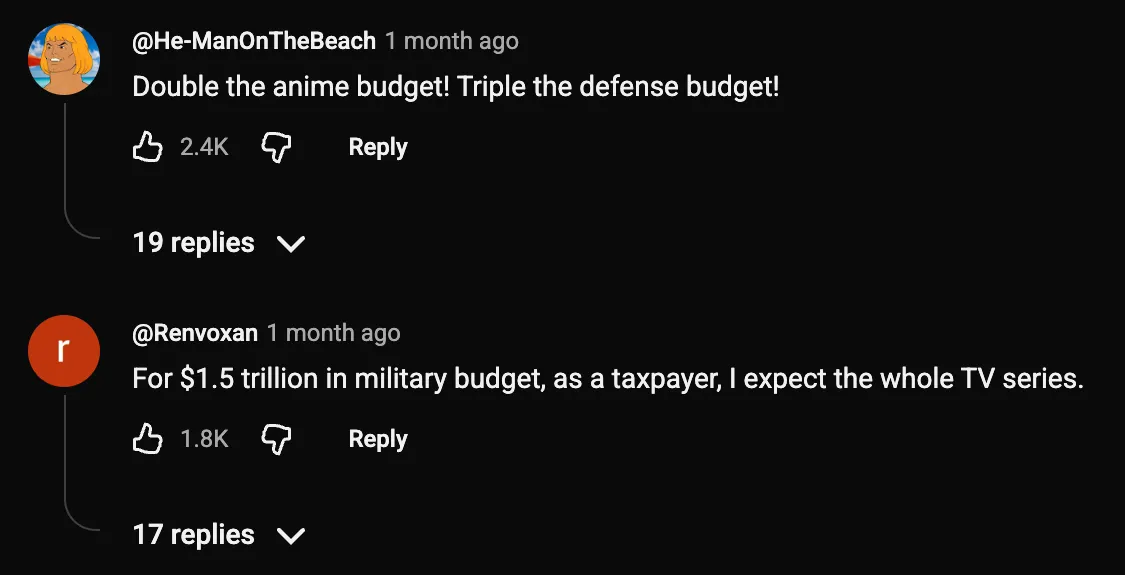
Another necessary concession: in the grand scheme of defense contractor influence tactics, a couple of hoodies, bumper stickers, and animated shorts are a rounding error. If the sector has ordinary levers to pull, Anduril is pulling them—it spent $2.15 million on lobbying in 2025, up from $1.86 million the year before. But their apparent experiments in fandom-building are worth taking seriously because they operate in the one register where lobbying can’t reach. While a lobbyist is paid to secure access on behalf of a company and its products, a fandom generates unpaid advocates of the product itself. Here, we find a fourth form of deniability: a constituency that no disclosure regime has ever been designed to count.
While legacy primes have always understood the value of manufactured constituency, their methods are much more direct: scattering subcontractors across as many congressional districts as possible so that any given program ends up holding a critical chunk of some state’s economy hostage. This clearly works, but it’s exceedingly slow and costly, and everyone involved is under no illusions about the transaction they’re taking part in.
Fan Theory
At this point, it would be easy for me to say that Anduril is, in fact, laying the groundwork for a case study in fandom-as-lobby—but I don’t think I can say that, because I just spent several paragraphs conceding that the mechanism remains unproven. The best I can do is demonstrate that the vocabulary makes it legible; whether it can make Line Go Up remains unclear. Perhaps the more accurate answer is that Anduril itself is a case study in a company behaving as if fandom-as-lobby were possible.
The idea of assembling a constituency out of anime visual novels and blind boxes in a matter of years feels like a tall order when weighed against the half-century timelines and thousand-subcontractor outreach efforts of Lockheed and Raytheon. That idea could also just be straight-up wrong. The field of corporate strategy is full of expensively ineffective and/or out-of-touch theories, and this could be a strong and entertaining contender for the hall of fame.
However, it’s also possible that this isn’t the real “big idea” here. A fandom that moves appropriations may be a long-term nice-to-have compared to what’s stated explicitly in the visual novel’s launch copy: a fandom that moves resumes. For a company within a category that runs on a set labor pool of people who are increasingly wary of their engagement with systems built to kill, every hoodie that moves the needle toward an engineer taking an offer has already paid for itself many times over. With that base-case objective on the table, any emails those hoodies inspire to Congress could just be a value-add. This is also exactly what the Warthog lacked — without a living manufacturer, an organic fandom has no floor to land on — and it gives what would otherwise be an exercise in pure vibes-based hyperstition a pretty clear and empirical fallback clause.
This kind of theory often has trouble staying false, too—and doesn’t need to be proven to take root. Once enough parties start behaving as if it’s true — from Anduril to KommandoStore fans, to the outlets that cover the collab, to the recent company hire who now owns the hoodie and knows how to turn it into a conversation piece in polite company — the gap between a workable theory of political affect and a widely held one gets awfully thin. Is Anduril trying to prove that fandom moves money, and is that hypothesis correct? I don’t know. But they’re running the experiment in public on a product line funded by Congress.
If that experiment works, it would open a lot of big and somewhat weird doors, most of which come back to one key distinction. Most forms of lobbying, from DC reps on K Street to “grassroots” movements and astroturfing, are registered, disclosed, and therefore countable. But nobody is a fan of Lockheed or Raytheon in the same way that people can now conceivably become fans of the Anduril Sisters. And since the average ALTIUS fanboy was never being paid to begin with, he can never be bought off.
One more disclosure: by my own definition of fandom, this essay represents several weeks and several thousand words of unpaid cognitive labor on behalf of the Anduril Sisters, including a passage where I defended the honesty of their parent company against the euphemistic positioning of their competitors, entirely unprompted. The machine already metabolizes angry reporters as earned media, and I see no reason to believe it can’t metabolize this as well. I’d like to think that naming a mechanism is different from feeding it, but, as I’ve noted about a range of different systems that capture cognitive labor, this one is under no obligation to register or accommodate my intent.
A guy who genuinely likes ALTIUS and posts about it — or better yet, her — unprompted has nothing to disclose: there’s no relationship, no itemized considerations, and no principal on the other end of the line. Of all the deniabilities in this piece, this is the only one that no act of Congress could close, because it isn’t a gap in the rules at all. Nobody has ever designed a form for a crush.